
The Reformation was a pivotal moment in the history of Christianity that reshaped the beliefs and practices of millions. Key figures like Martin Luther and John Calvin challenged the authority of the Catholic Church, leading to significant theological innovations and the rise of Protestantism. Their actions not only sparked religious reform but also ignited social and cultural changes across Europe.
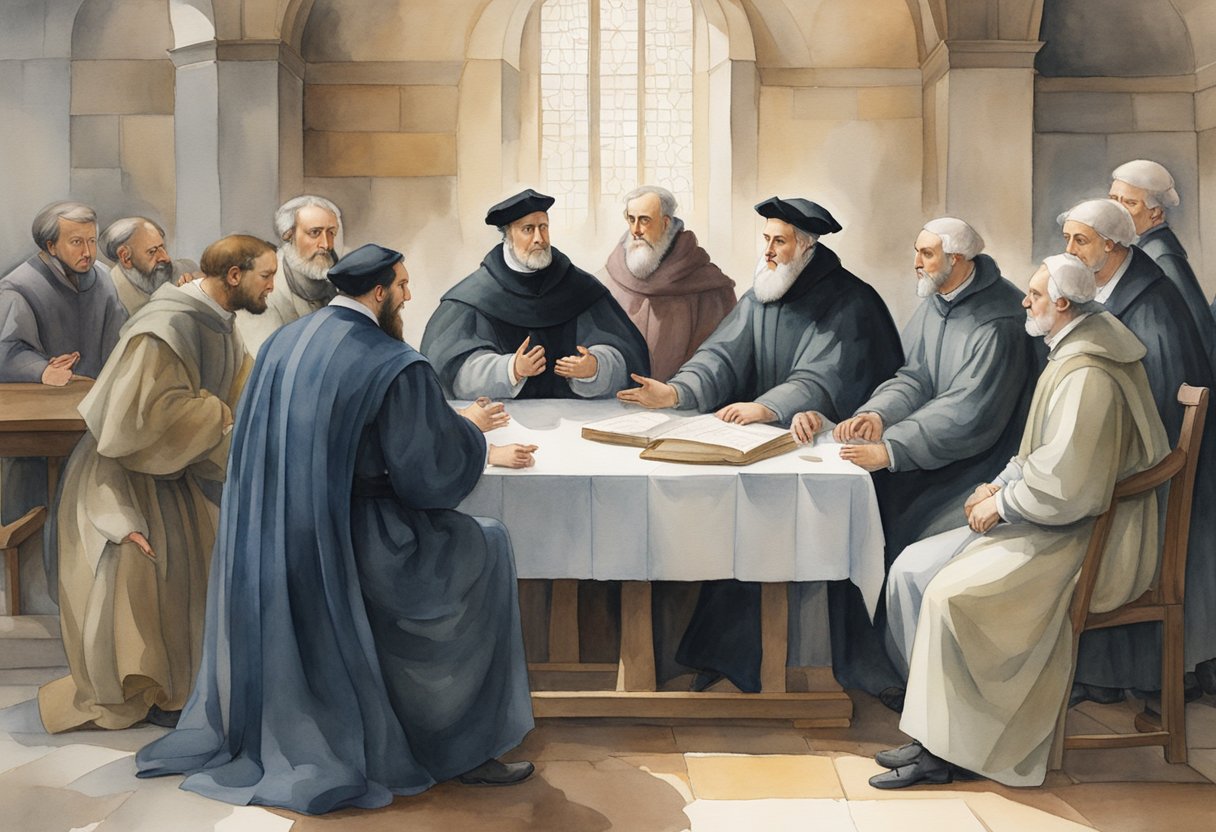

Understanding the doctrines that emerged during this time is essential to grasping the lasting effects of the Reformation. Concepts such as justification by faith and the priesthood of all believers changed the way people viewed their relationship with God and the church. This transformation set the stage for ongoing religious dialogue and conflict, making the Reformation a crucial chapter in Christian history.
As we explore the key figures and major doctrines of the Reformation, readers will gain insight into the crucial developments that altered the course of Christianity and its followers. The impact of this era extends beyond religion, influencing art, politics, and society as a whole.
Key Takeaways
- Martin Luther’s actions sparked the Reformation and challenged the Catholic Church’s authority.
- Major doctrines like justification by faith reshaped beliefs in Christianity.
- The Reformation’s legacy continues to influence modern society and religious practices.
Origins and Causes of the Reformation

The Reformation began as a response to various factors that challenged established church practices and beliefs. Key issues included theological discontent and significant cultural shifts. These elements played a vital role in shaping the movement.
Theological Discontent
Theological discontent among believers sparked the Reformation. Many people were unhappy with the Catholic Church’s teachings and practices. They felt that the Church had strayed from Biblical principles.
Martin Luther, a key figure, highlighted these issues in 1517 with his Ninety-Five Theses. He argued that salvation came through faith alone, not through good works or buying indulgences. This idea contradicted the Church’s practices and gained traction among the faithful.
Other reformers like John Calvin emphasized Scripture’s authority as opposed to Church traditions. They promoted the idea that anyone could directly interpret the Bible. This shift encouraged people to question established church teachings and seek truth independently.
Cultural and Intellectual Shifts
The Renaissance and the Humanist Movement greatly influenced the Reformation. The Renaissance encouraged a return to classical learning and critical thinking. This environment fostered new ideas about faith and governance.


Humanists, who valued individual thought and study, questioned the Church’s authority. They encouraged reading and interpreting texts, including the Bible, in the original languages. This access helped people explore their beliefs beyond what the Church taught.
With more people engaging in discussions about faith, the call for reform grew louder. The combination of these cultural changes played a crucial role in motivating the Reformation.
Key Figures of the Reformation
The Reformation saw the rise of influential leaders who transformed Christianity. Their ideas challenged the Catholic Church and led to the birth of new branches of Christianity. Key figures like Martin Luther, Ulrich Zwingli, and John Calvin each played unique roles in this significant movement.
Martin Luther and His Role

Martin Luther was a central figure in the Reformation. He famously nailed his 95 Theses to the church door in Wittenberg on October 31, 1517. His objections to selling indulgences sparked widespread debate.




Luther believed in salvation through faith alone. He emphasized that believers should interpret the Bible for themselves. His translation of the Bible into German made scriptures accessible to many. This act helped people connect more directly with their faith.
Luther’s teachings led to the establishment of the Lutheran Church. He inspired followers to challenge the authority of the Catholic Church, marking a turning point in Christian history.
Ulrich Zwingli’s Influence
Ulrich Zwingli was another key reformer in the Reformation. He was based in Zurich, Switzerland, where he promoted religious changes. He argued against rituals and practices that weren’t in the Bible.
Zwingli supported the idea of communion as a symbolic act rather than a literal transformation. His views encouraged a more personal interpretation of faith. He believed that church practices should be grounded in scripture.
Zwingli’s influence spread through Switzerland and beyond. His ideas laid the groundwork for the Reformed tradition, which helped shape the future of Protestantism.
John Calvin’s Contributions
John Calvin was a prominent figure in the Reformation, especially in Geneva. His work focused on creating a systematic theology that emphasized God’s sovereignty. He believed in predestination, which taught that God had already chosen who would be saved.
Calvin’s teachings emphasized a disciplined, moral life. He established a theocratic government in Geneva where church and state were closely linked. This model influenced many Protestant communities across Europe.
His book, Institutes of the Christian Religion, laid out his ideas and became a foundational text for Reformed theology. Calvin’s contributions shaped how Christianity developed in the following centuries.
Other Prominent Reformers
In addition to Luther, Zwingli, and Calvin, other reformers played important roles. The Anabaptists were known for their beliefs in adult baptism and separation from the state. They sought a return to what they viewed as early Christian practices.

Men like John Wycliffe and Jan Hus also set the stage for later reforms. Wycliffe translated the Bible into English, promoting Scripture’s accessibility. Hus criticized church corruption and was executed for his beliefs.
These figures collectively advanced the Reformation and altered the course of Christianity. Their courage and convictions inspired future generations to seek religious freedom.
Major Doctrines and Theological Innovations
The Reformation brought new ideas that changed how people understood faith and religion. Key doctrines emerged that challenged established beliefs, focusing on Scripture, faith, and the nature of salvation. These concepts reshaped Christianity for many.
Sola Scriptura: Scripture Alone
Sola Scriptura emphasizes the Bible as the sole authority in Christian life. Reformers believed that all teachings must be grounded in Scripture. They argued that Church traditions should not hold equal weight to the Bible. This belief encouraged individuals to read and interpret the Scriptures themselves. By doing so, they could connect personally with their faith rather than relying solely on clergy. This idea promoted a stronger, more personal relationship with God and a deeper understanding of Christian teachings.
Sola Fide: Justification by Faith Alone

Sola Fide teaches that faith alone is sufficient for salvation. Martin Luther strongly promoted this doctrine, arguing that people are justified, or made right with God, through faith instead of good works. He believed that grace is a gift from God received through faith. This idea challenged the Church’s emphasis on rituals and actions for salvation. It reassured believers that trusting in Christ’s sacrifice was the only requirement for eternal life, making faith the center of Christian belief.
The Doctrine of Predestination
Predestination is the belief that God has chosen certain individuals for salvation before they are even born. This idea was notably supported by John Calvin. He taught that God’s grace is given to the elect, and their fate is predetermined.
This doctrine raised important questions about free will and human choice. It assured some believers of their salvation while causing anxiety in others who wondered if they were among the elect. Predestination emphasized God’s sovereignty and control over salvation, creating a sense of humility among believers.
Protestant Views on the Sacraments
Protestants view the sacraments differently than the Catholic Church. The two main sacraments recognized in Protestantism are Baptism and the Eucharist.
Baptism symbolizes a believer’s entrance into the Christian community. It represents cleansing and the start of a new life in Christ. The Eucharist, or Communion, is seen as a remembrance of Christ’s Last Supper. Unlike Catholics, Protestants often believe that the bread and wine are symbolic, rather than transubstantiated into the actual body and blood of Christ.
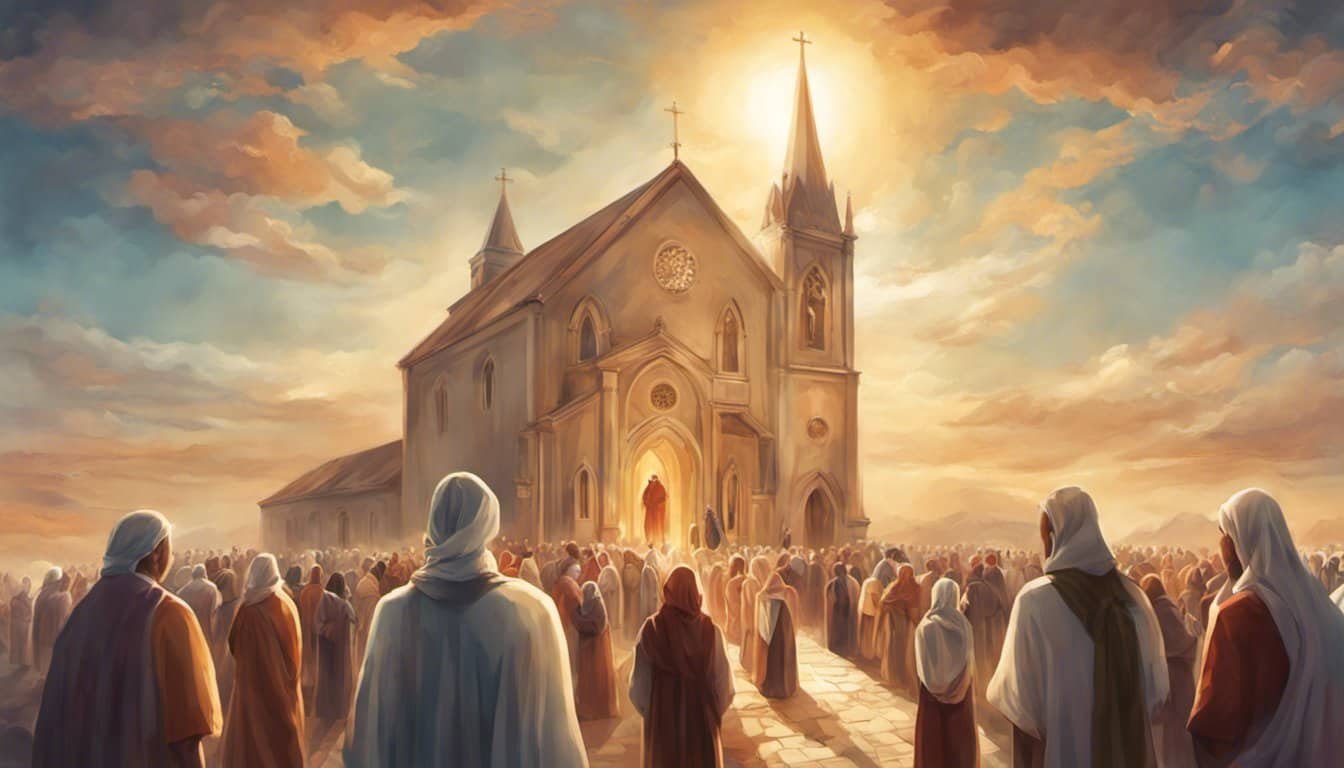
This shift in understanding highlighted the importance of personal faith over ritualistic practice.
The Priesthood of All Believers
The Priesthood of All Believers is a key idea that challenged the hierarchical structure of the Catholic Church. This doctrine asserts that every Christian has direct access to God without needing a priest as an intermediary.
Martin Luther emphasized that all believers are called to share their faith and serve others. This teaching encouraged lay participation in ministry and the believer’s responsibility to live out their faith. It nurtured a sense of equality among Christians, promoting a community where everyone has a role in the church.
This idea was revolutionary, helping to break down barriers that had previously existed within the church and empowering individuals to pursue their spiritual journeys.
Reformation and Practices
The Reformation brought significant changes to religious practices. It transformed how salvation was viewed, altered church governance, and reshaped worship to align more closely with scriptural teachings.
The End of Indulgences and Purgatory
Indulgences were certificates sold by the Catholic Church that promised a reduction in punishment for sins. Reformers, particularly Martin Luther, strongly opposed this practice, arguing it distorted the true path to salvation. They believed salvation comes through faith alone, not purchased relief.
The emphasis shifted away from the concept of purgatory, a place for cleansing before heaven. Many reformers taught that trusting in God’s grace was sufficient for salvation. This was a radical change that encouraged personal faith rather than reliance on church practices.
Shifts in Church Governance and Worship
The Reformation led to new forms of church governance. It moved away from the hierarchical structure of the Catholic Church. Reformers like John Calvin advocated for a system where local congregations had more say in their governance.
Worship became less formal and more focused on the congregation. Services were conducted in local languages instead of Latin. This accessibility allowed more people to engage directly with the teachings of the Bible, fostering a sense of community and shared faith.
New Approaches to Religious Education and the Mass
Religious education also underwent a transformation during the Reformation. Reformers believed teaching the Bible was essential for spiritual growth. Schools were established to educate both children and adults in scripture.
The Mass was simplified to reflect these educational changes. It focused on the sermon and reading of the Bible, rather than rituals. This made religious practices more relatable and understandable for everyday believers, enriching their spiritual lives.
Key Conflicts and Events
The Reformation was marked by several key conflicts and events that reshaped Christianity in Europe. These moments not only highlighted the tension between the Catholic Church and reformers but also set the stage for new religious movements.
Diet of Worms and Martin Luther’s Excommunication
In 1521, Martin Luther attended the Diet of Worms, a formal assembly of the Holy Roman Empire. He was asked to recant his writings against the Catholic Church. Luther stood firm, famously stating, “I cannot and will not recant anything.” This bold stance led to his excommunication by Pope Leo X.

As a result, Luther was declared an outlaw, putting him at risk. Supporters, such as Frederick the Wise, provided him shelter. This significant moment solidified Luther as a leading figure of the Reformation and encouraged more people to question the Church’s authority.
Formation of Protestant Churches
Following Luther’s actions, various reformers embraced his ideas. Figures like John Calvin and Ulrich Zwingli began establishing distinct Protestant churches. By the mid-16th century, the Protestant movement had gained momentum.
Each denomination held different beliefs, with Calvinism emphasizing predestination and communal governance. This variety appealed to many and contributed to a growing divide that lasted for centuries. The formation of these Protestant Churches played a crucial role in spreading Reformation ideas across Europe.
The Role of the Printing Press
The printing press was pivotal during the Reformation. Johannes Gutenberg invented it in the 15th century, and it allowed for the rapid spread of new ideas. Luther’s Ninety-Five Theses became widely distributed, reaching many who were previously unaware of the Church’s practices.
Printed pamphlets and books challenged the Catholic Church’s teachings and informed the public about reformist ideas. This increased literacy and engagement with religious texts. The printing press not only helped spread the Reformation message but also united supporters across Europe through shared literature, effectively changing the religious landscape.
Societal and Cultural Impact

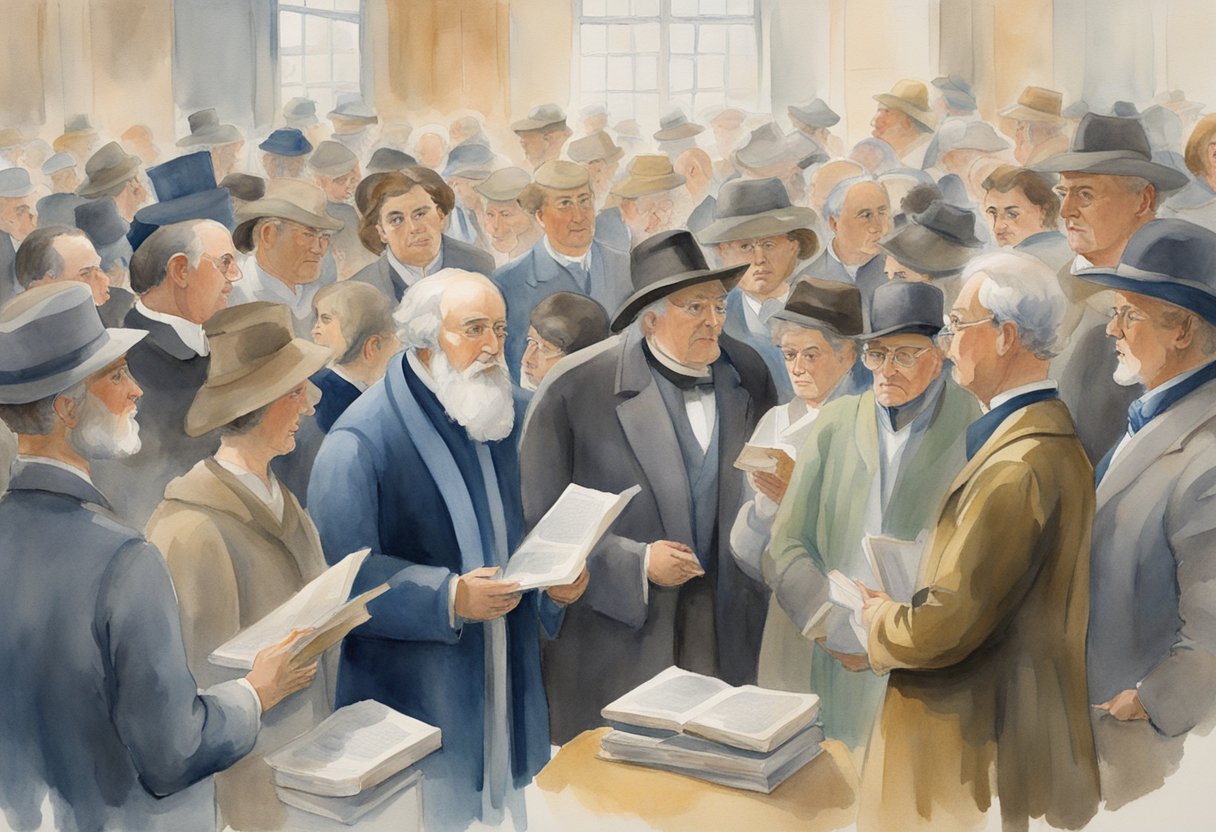
The Reformation brought significant changes to society and culture in Europe. It affected education and literacy, influenced political structures, and transformed family and community life. These changes reshaped how people viewed their lives and their roles in society.
Effects on Education and Literacy
The Reformation prioritized education for all. Reformers like Martin Luther stressed the importance of reading the Bible in one’s own language. This led to a push for public schools where children could learn to read and write.
Many new schools opened during this time, focusing on basic literacy and religious teaching. This increased literacy rates across Europe. For example, literacy among Protestant communities grew significantly.
With more people able to read, the spread of ideas accelerated. Printed materials like pamphlets and books became available, promoting new ways of thinking. The result was a more informed and engaged populace.
Influence on Political Realms

The Reformation also impacted political structures and authority. As religious figures gained power, they often challenged the existing political order. For instance, leaders like John Calvin and Martin Luther questioned the authority of the Pope.
This led to the rise of state churches. Governments took on roles previously held by religious authorities. In many areas, rulers began to enforce religious conformity. This often resulted in conflicts as differing beliefs clashed.
As nations established their identities, the idea of individual rights began to emerge. People began to think about their rights in relation to government, laying the groundwork for future political movements.
Shifts in Family and Community Life
Family and community dynamics changed during the Reformation. The emphasis on reading the Bible at home encouraged families to engage in religious discussions. This helped to strengthen family bonds and build a sense of shared values.
Communities became more polarized as religious divisions deepened. Protestant and Catholic neighbors often found themselves at odds, leading to conflicts and tensions. Yet, this also encouraged a sense of community among those who shared the same beliefs.
Marriage practices shifted as well, with many reformers advocating for the idea of marriage as a partnership. This altered traditional views and promoted new family roles. Overall, the Reformation shaped how families and communities interacted with each other and their beliefs.
Counter-Reformation and Catholic Response
The Counter-Reformation was a crucial period for the Catholic Church as it sought to respond to the challenges posed by the Protestant Reformation. Key actions included the Council of Trent, the establishment of Catholic missions, and the formation of the Jesuits to defend and spread Catholic beliefs.
Council of Trent and Catholic Doctrine
The Council of Trent, convened from 1545 to 1563, was a major response to Protestant reforms. This council established important Catholic doctrines and addressed issues of corruption within the Church. It reaffirmed core beliefs, such as the importance of tradition alongside Scripture.
Key points included:
- Salvation through faith and good works.
- The seven sacraments were upheld as essential.
- The necessity of Church authority in interpreting the Bible.
These decisions aimed to clarify Catholic beliefs and strengthen the Church’s position against Protestant claims.
Catholic Renewal and Missions
In addition to doctrinal reforms, the Counter-Reformation brought about a revival in Catholic spirituality and outreach. The Church launched missions to convert non-Christians and reclaim lost territories. This renewed focus aimed to inspire Catholics and attract new followers.
The Catholic Church emphasized:
- The importance of education and moral living.
- The establishment of new religious orders.
- Activities aimed at reforming the clergy.
These efforts helped to energize the Church and strengthened its global presence.
Jesuits and the Defense of Catholicism
The Society of Jesus, often known as the Jesuits, played a pivotal role during the Counter-Reformation. Founded by Ignatius of Loyola in 1534, they were committed to the mission of spreading Catholic teachings.
Their contributions included:
- Establishing schools and universities to educate youth.
- Engaging in missionary work across continents.
- Actively defending the Catholic faith against Protestant criticism.
Jesuits became significant in promoting Catholic values and worked diligently to counteract the spread of Protestantism. Their efforts were key in preserving Catholic influence during this tumultuous time.
Legacy of the Reformation
The Reformation had a lasting impact on religion and society. It reshaped Christian faith, influencing many modern denominations and movements. The changes started in the 16th century still affect belief systems today.
Long-Term Religious Consequences
The Reformation caused a significant split in Christianity. It led to the creation of various Protestant denominations, such as Lutheranism and Calvinism. These groups brought new interpretations of the Bible and emphasized personal faith.
Many traditional Catholic practices were challenged. This shift also caused conflict, notably the Thirty Years’ War, which involved both Catholics and Protestants. The Reformation’s legacy continues, influencing religious dialogue around the world and prompting ongoing discussions about faith and authority.
Protestantism’s Role in Modern Christianity
Today, Protestantism is a major branch of Christianity. It includes many denominations like Baptists, Methodists, and Pentecostals. Each group has unique beliefs and practices, but they share roots in Reformation principles.
Protestants emphasize the importance of individual interpretation of the Bible. This contributed to a more personal connection to faith. Many modern social movements, including those promoting education and social justice, can trace their origins back to Reformation values.
The Reformation’s Influence on Later Movements
The Reformation inspired other religious movements and changes. Groups such as the Anabaptists and Quakers emerged from its principles.
These movements often stressed equality and community, challenging established norms. The emphasis on questioning authority has influenced modern faith practices. Further, the Reformation set the stage for religious tolerance in later centuries, paving the way for a broader understanding of faith and belief.
Conclusion
The Reformation played a crucial role in shaping modern Christianity. It sparked the Protestant Movement, leading to the formation of various denominations. This shift allowed many to explore their faith more freely.
With the rise of different beliefs, religious freedom became a central theme. People began to question strict church authority and seek personal connections with God. This encouraged diverse interpretations of Christianity.
The Reformation also contributed to the birth of a more secular society. As religious control lessened, other aspects of life gained importance. Art, science, and human rights flourished in the wake of new ideas.
Today, the legacy of the Reformation is still felt. It laid the groundwork for open discussions about faith and belief. The emphasis on personal conscience continues to influence spiritual practices around the world. Understanding this history helps to appreciate the diverse landscape of religion today.
