
Anglican theology embraces a unique path known as the via media. This path seeks to balance elements of Catholicism and Protestantism. As a result, this approach not only enhances Anglican worship but also strengthens the community’s identity and theological foundations.
Through liturgical tradition, Anglicans express their beliefs. This creates a rich tapestry of worship that engages both the mind and spirit.


The way Anglicans practice their faith reflects their commitment to a middle way that fosters unity while respecting diversity.

Liturgical practices serve as a vehicle for exploring theological themes and understanding the nature of the Church. This allows individuals and congregations to connect deeply with their faith. This blending of tradition and contemporary thoughts captivates many followers and seekers alike.
The discussion of Anglican theology and its liturgical expressions reveals much about how individuals approach spirituality today. Readers will discover not only the historical roots of the Anglican tradition but also how these enduring practices shape their beliefs and communities in the modern world.
Key Takeaways
- Anglican theology focuses on the via media, balancing various Christian traditions.
- Liturgical practices are central to expressing and deepening faith.
- The Anglican approach fosters unity and diversity within the Church community.
Foundations of Anglican Theology
Anglican theology is built on a combination of historical context, key principles, and the unique position of the faith between two major traditions. Understanding these foundations helps illuminate the character and practice of Anglicanism today.
Historical Context and Roots
Anglicanism originated during the English Reformation in the 16th century. King Henry VIII’s desire for an annulment led to a break from the Roman Catholic Church. This shift allowed the Church of England to emerge, establishing its own identity.
Key figures like Thomas Cranmer played crucial roles in shaping Anglican beliefs and practices. The English Reformation introduced important texts, such as the Book of Common Prayer, which helped define Anglican worship.


The Elizabethan Settlement aimed to bring stability, blending Protestant and Catholic elements. It sought a middle ground to unify the church while respecting both traditions.
Key Principles and Beliefs
Anglican theology is grounded in three main sources: Scripture, Tradition, and Reason. These elements guide Anglicans in understanding faith and practice.
Scripture: The Bible is central to Anglican belief. It is seen as God’s Word and a source of authority for faith and conduct.
Tradition: The historical teachings and practices of the Church carry significant weight in Anglicanism. They connect present believers to the church’s past.
Reason: Anglicans value human reason and experience in interpreting faith. This approach allows for thoughtful engagement with doctrine and theology.
These three principles work together to shape a comprehensive understanding of faith in the Anglican tradition.
Anglicanism and the Via Media
The concept of the via media is essential to Anglican identity. This term means “middle way” and reflects Anglicanism’s position between Catholicism and Protestantism.

Anglicanism embraces Catholic traditions like the sacraments while also incorporating Protestant beliefs, such as justifying faith through grace. The via media offers a balanced approach to faith that maintains essential elements from both sides.




This unique stance fosters a sense of inclusivity, encouraging diverse theological views within the church. It allows Anglicans to engage with a broad spectrum of beliefs, promoting unity in diversity.
Central Religious Texts
Anglican theology is deeply rooted in several key texts that guide worship and doctrine. The Book of Common Prayer, the Thirty-Nine Articles of Religion, and interpretations of Holy Scripture shape the faith and practices of the Anglican tradition.
The Book of Common Prayer
The Book of Common Prayer (BCP) is a foundational text in Anglican worship. It contains prayers, liturgies, and guidelines for various services throughout the church year.
First published in 1549, the BCP was a product of the English Reformation and aimed to provide a uniform way of worship for Anglicans.
The BCP emphasizes a balance of scripture, tradition, and reason. It includes various services like Morning and Evening Prayer, the Eucharist, and Baptism. This text is essential for teaching congregations about their faith and for creating a shared worship experience. Its language has shaped Anglican identity over centuries.
Thirty-Nine Articles of Religion
The Thirty-Nine Articles of Religion are another critical set of documents in Anglican theology. They were established in 1563 as a response to the Reformation’s challenges.
These articles outline key beliefs about scripture, the church, and sacraments.
The articles affirm Anglicanism’s middle way, distinguishing it from both Catholicism and other Protestant groups. They cover topics like justification by faith, the authority of Scripture, and the nature of the church. This clarity helps traditionalists understand their beliefs and provides a basis for Anglican doctrine.
Holy Scripture Interpretation

Interpreting Holy Scripture is central to Anglican practice. The tradition holds scripture as the primary source of authority, guided by reason and tradition.
This approach allows for a thoughtful engagement with biblical texts.
Anglicans believe that both the Old and New Testaments are essential for guiding faith and morals. Creeds, such as the Nicene and Apostles’ Creeds, often accompany scripture readings in worship. This connection helps to affirm core beliefs and fosters a deeper understanding of the faith. The emphasis on interpretation encourages a diverse yet unified community within Anglicanism.
Worship and Liturgical Practice
Worship in the Anglican tradition is rich and layered, focusing on community and sacramental practices. The evolution of liturgy, the significance of sacraments, and the communal aspect of worship highlight how Anglicans connect with their faith.
The Liturgy’s Evolution

The Anglican liturgy has roots in the early church and has evolved significantly over the centuries. Initially, services were quite structured but varied widely among regions.
The Book of Common Prayer, first published in 1549, unified worship practices, offering a standard for Anglican services.
Today, this liturgy reflects the Anglican via media, balancing Catholic and Protestant elements. The structure often includes readings from the Bible, prayers, hymns, and a sermon. This evolution allows for both solemnity and participation, enriching the worship experience.
Importance of Sacraments
Sacraments are central to Anglican worship, with the Eucharist, or Holy Communion, being the most significant.
This sacrament represents a connection to Christ and a remembrance of his sacrifice. In the Anglican tradition, it is believed that the bread and wine serve as a means of grace.

The practice involves not just the act of receiving but also a communal element where believers gather to partake together. This reinforces the principles of lex orandi, lex credendi, meaning the way they pray shapes their beliefs. It emphasizes the importance of intention during worship.
Liturgy as Community Worship
Community is at the heart of Anglican liturgy. Worship services are designed to be inclusive, encouraging participation from all members.
From reading scripture to leading prayers, everyone can contribute in meaningful ways. This communal aspect fosters a sense of belonging and unity. The liturgy serves not only as a personal experience but also as a shared journey of faith. Worship becomes a collective expression rather than an individual one, emphasizing the idea that faith is best lived in community.
Ecclesial Structure and Leadership
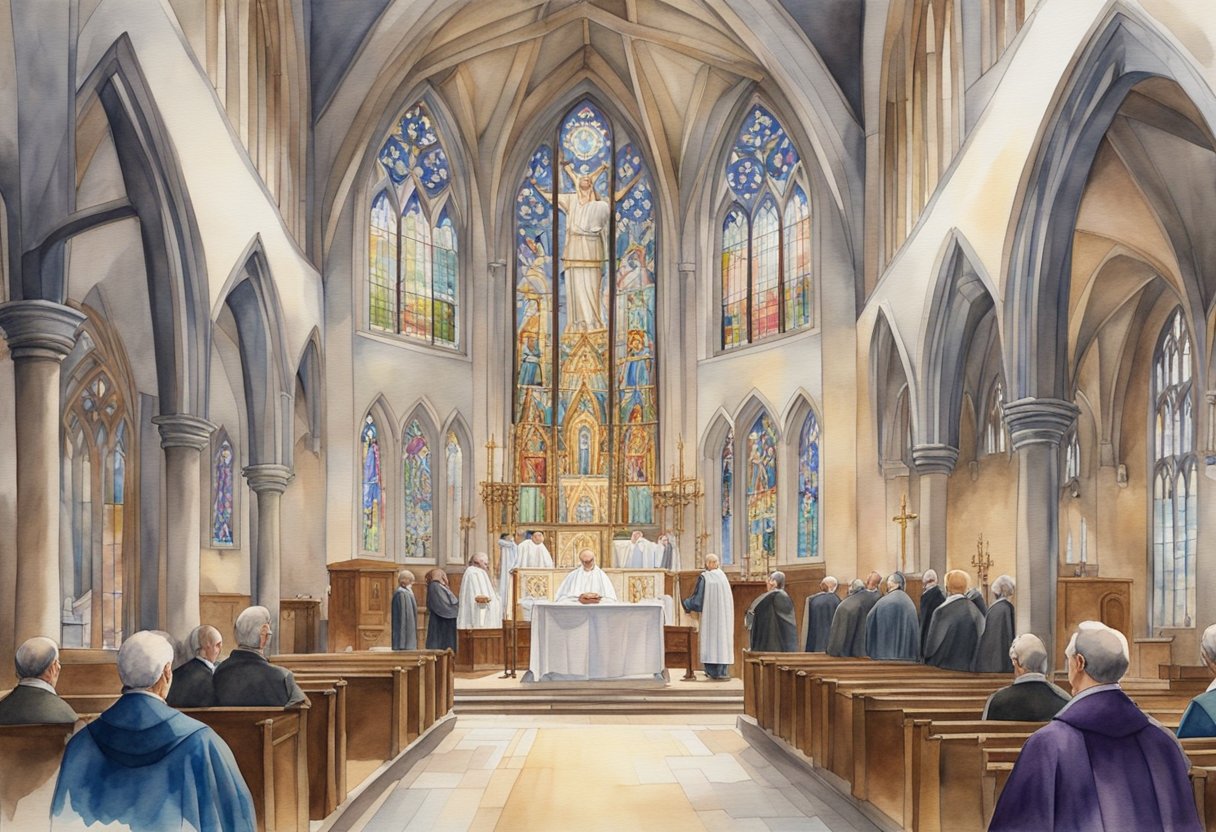
The structure and leadership in Anglican theology center around a defined hierarchy and collaborative governance. This system involves bishops, priests, and deacons, who work together to serve the church community. Understanding this structure helps to appreciate how decisions are made and how spiritual guidance is provided.
The Role of Bishops, Priests, and Deacons

In the Anglican tradition, bishops hold a high position within the clergy. They are responsible for the oversight of multiple congregations and play a vital role in church governance. Bishops also ordain other clergy members and are often involved in theological education.
Priests serve under bishops and lead individual congregations. They deliver sermons, perform sacraments, and provide pastoral care. Priests also take part in local governance, helping to shape the church’s mission and outreach.
Deacons assist both bishops and priests. Their role mainly focuses on service and outreach within the community. Deacons support congregations by organizing mission projects and community service initiatives, reinforcing the church’s presence in everyday life.
Governance and Synodality
Anglican governance is characterized by synodality, a process that involves decision-making through councils. These councils consist of bishops, clergy, and lay members. They meet regularly to discuss church matters and create policies.
The General Convention, a key governing body in the Episcopal Church, meets every three years. It brings together representatives from different dioceses to make decisions on important issues, from liturgical practices to social justice matters.

This structure encourages collaboration and inclusivity.
Decisions are made from the ground up, allowing for input from various community members. This synodal approach fosters a sense of unity and shared purpose across the Anglican Communion.
Church, State, and Autonomy
The relationship between church and state varies across regions where Anglicanism is practiced. In some areas, such as England, the Church of England is closely linked to the government, influencing public policy.
Despite these ties, Anglican churches around the world maintain a degree of autonomy. This allows local congregations to adapt practices and governance to better suit their communities.
Each province within the Anglican Communion can determine its own policies, fostering diversity within the unity of the church.

While these connections exist, Anglican leadership stresses the importance of spiritual independence. This commitment ensures that church decisions prioritize faith and community needs above political influences.
Ecclesiology and the Nature of the Church
Understanding ecclesiology is essential for grasping the nature of the Church in Anglican theology. There are key aspects that define how Anglicans view the Church’s identity, including the concepts of the visible and invisible Church, the blend of Catholic and Reformed identity, and the significance of the Apostolic Church.
Visible and Invisible Church
The distinction between the visible and invisible Church is vital in Anglican thought. The visible Church refers to the community of believers seen in worship and fellowship. It includes congregations, dioceses, and the entire Anglican Communion. This aspect highlights unity and the importance of community worship.
The invisible Church, on the other hand, is the spiritual reality of all true believers. This includes those who have faith in Christ, regardless of denominational affiliation. It recognizes that many faithful people may not belong to any particular church organization. This duality reflects the complexity of what it means to be part of God’s Church.
Catholic and Reformed Identity

Anglican ecclesiology embraces both Catholic and Reformed identities, creating a unique blend. It maintains a strong connection to Catholic traditions, emphasizing the importance of sacraments, apostolic succession, and liturgical practices often found in high church contexts.
Simultaneously, Anglicanism also aligns with Reformed theology, focusing on Scripture’s authority and personal faith. This balance allows for a diverse range of expressions within the denomination. You can see this in the existence of low church communities that prioritize preaching and personal piety. This spectrum enriches the Anglican identity and strengthens the Anglican continuum.
The Apostolic Church
The concept of the Apostolic Church is crucial in Anglican ecclesiology. It asserts that the Church is not only a present community but has historical roots tracing back to the apostles themselves. This connection underlines the importance of tradition in Anglican practice.
Anglicans believe that their faith is a continuation of the true Church established by Christ. By maintaining apostolic succession through bishops, they ensure that the teachings and practices of the early Church are preserved. This continuity grounds Anglican worship and doctrine in a historical context, creating a sense of belonging to a larger story of faith.
Theological Disputes and Developments

Anglican theology navigates rich historical tensions and modern developments. Key elements include the ongoing debates between Catholic and Protestant beliefs, contemporary trends shaping doctrine, and efforts toward dialogue with other denominations.
Catholic vs. Protestant Tensions
The Anglican tradition emerged from the schism with Rome in the 16th century, which created tension between Catholic and Protestant views. The Church of England sought a middle ground, emphasizing both scripture and tradition.
Papal authority, especially the concept of papal infallibility, remains a point of contention. Some Anglicans embrace a more Catholic liturgical style, aligning with aspects of the Eastern Orthodox tradition. In contrast, others focus on Protestant principles of faith, leading to diverse beliefs within Anglicanism.
This tension continues to shape debates on discipleship and the role of the church in a changing world. Various groups, such as the Methodists and Lutherans, also face similar issues, highlighting the broader spectrum of Christian thought.
Contemporary Theological Trends
Today, Anglicanism witnesses shifts influenced by cultural changes and theological insights. Many Anglicans advocate for a more inclusive approach, engaging with issues like social justice and equality. The influence of figures like Pope Francis promotes an open dialogue about faith and modern concerns.
Innovations in worship and teaching methods are evident as the church adapts to contemporary society. Movements within Anglicanism increasingly embrace evangelical perspectives while also valuing traditional practices.
This evolution reflects ongoing discussions about the development of doctrine and how it applies to everyday faith experiences. The tension between maintaining historical roots and embracing modernity is vital for the future of Anglican theology.
Dialogue with Other Denominations
Anglicanism actively engages in dialogue with other Christian denominations to foster unity. This approach reflects a commitment to understanding differences while finding common ground.
Efforts like ecumenical initiatives encourage cooperation with Catholic, Protestant, and Eastern Orthodox churches. The focus is on shared beliefs and collaborative missions, such as service and social justice.
By promoting this dialogue, Anglicans aim to overcome historical divisions. They seek to build relationships with Puritans, Methodists, and other groups, which can lead to enriched understanding and potentially new theological insights. Combining perspectives fosters a spirit of community and mutual respect among Christians.
Spiritual Practices and Disciplines
Anglican spirituality is rooted in rich practices that enhance personal faith and community worship. It joins individual devotion with collective liturgical traditions, focusing on disciplines that nurture discipleship and deepen understanding of salvation.
Personal Devotion and Prayer
Personal devotion is essential in the Anglican tradition. It involves daily practices like prayer, meditation, and Bible reading.
Individuals are encouraged to set aside time for quiet reflection. This could include using the Book of Common Prayer, which offers structured prayers and collects for different times of the day.
In personal prayer, one can focus on different themes, such as gratitude or intercession. Incorporating scripture into prayer life strengthens faith and understanding. Maintaining a journal to track prayers and reflections can also aid in personal growth and spiritual awareness.
Corporate Worship and Liturgy
Corporate worship fosters a sense of community while honoring tradition. Anglican services typically follow a liturgical structure that includes readings from the Holy Scriptures, prayers, hymns, and a sermon.
This structure encourages participation and unity among the congregation.
The Eucharist, or Holy Communion, is central to Anglican worship. It symbolizes community and the remembrance of Jesus’ sacrifice, offering a vital connection to the faith. Regular participation in corporate worship reinforces beliefs and fosters relationships within the church community.
Sacramental Living
Sacramental living is fundamental in Anglican theology, highlighting the importance of rituals like baptism and marriage.
Baptism is a key rite of initiation, symbolizing the entry into the faith community. It represents a commitment to a life of discipleship and connection to God’s grace.
Marriage is also viewed as a sacred covenant. Anglicans celebrate this with special liturgies that emphasize the sacred nature of the relationship. Both sacraments are seen as pathways to experience God’s love and to uphold the values of faith and commitment in everyday life.
Anglican Theology in Society

Anglican theology plays an essential role in shaping society through its teachings on ethics, mission work, and interfaith relations. This framework is rooted in the belief that faith can influence social practices and community life.
Ethics and Social Teaching
Anglican ethics emphasizes the importance of justice, compassion, and community. The teachings encourage followers to act in ways that promote human dignity and social welfare.
Key ethical principles include:
- Justice through action: Anglicans are called to advocate for social change, addressing poverty and inequality.
- Compassion: Followers are encouraged to show love and care for their neighbors.
- Moral reasoning: Decision-making is guided by scripture, tradition, and reason.
These principles shape a social teaching that is relevant to modern issues, helping individuals reflect on their faith in everyday situations.
Revival and Mission Work
Anglican theology supports revival movements that aim to renew faith and reach out to communities. This mission emphasizes the need for spiritual growth and evangelism.
Revival efforts focus on:
- Salvation: The message of salvation through Christ is central in outreach programs.
- Community engagement: Anglicans are encouraged to work within their local communities, addressing spiritual and physical needs.
- Mere Christianity: This approach seeks common ground with other Christians, emphasizing shared beliefs over divisions.
These activities reinforce the Anglican commitment to spreading the Christian faith and fostering deeper relationships within communities.
Interfaith Relations
Anglicanism promotes dialogue and cooperation among different faith traditions. Recognizing the diversity of beliefs, Anglicans engage constructively with others, aiming to foster understanding and respect.
Important aspects include:
- Shared values: Anglicans look for common ground in ethical teachings and humanitarian efforts.
- Dialogue initiatives: They participate in interfaith dialogues to address global issues like peace and justice.
- Cultural exchange: Engaging in cultural initiatives helps build bridges between communities.
These efforts reflect a commitment to love and respect, vital for harmonious coexistence in diverse societies.
Influential Figures and Writings
In Anglican theology, several key figures and their writings shaped the understanding of the via media and liturgical tradition. Their contributions helped define the balance between Protestant and Catholic practices within the Church of England.
Archbishop Thomas Cranmer
Archbishop Thomas Cranmer is a central figure in Anglican history. He was a key architect of the Book of Common Prayer, which established a common liturgy for English-speaking worshippers.
Cranmer sought to create a form of worship that was accessible and understandable. His writing emphasized the authority of Scripture while incorporating traditional elements.
His work during the Protestant Reformation was crucial in establishing a distinct Anglican identity. Cranmer’s theological insights encouraged the idea of a middle way between Catholicism and Protestantism.
Richard Hooker and Theologians
Richard Hooker made significant contributions to Anglican thought in the late 16th century. His main work, Of the Laws of Ecclesiastical Polity, argued for the role of reason in understanding faith. Hooker believed that Scripture, tradition, and reason together formed a strong foundation for Anglican belief.
His writings defended the via media as a legitimate approach to theology. Hooker influenced later theologians and helped to legitimize Anglicanism in a divided religious landscape.
His ability to combine different theological ideas made him a trusted figure among Anglicans, bridging gaps between various perspectives.
Significant Homilies and Texts
The Homilies, a collection of sermons written in the 16th century, are important texts in Anglican tradition. Compiled during Cranmer’s time, these homilies provided guidance on essential Christian doctrines and moral living.
They reinforced principles of the faith and addressed issues relevant to the Protestant Reformation. Titles such as The Salvation of Mankind and Of Good Works highlight key theological points.
These writings emphasized the need for personal faith and moral integrity. They served as a foundation for Anglican preaching, helping to shape the liturgical and theological landscape of the church.
Ecumenism and the Global Communion

The Anglican Communion plays a vital role in promoting dialogue and unity among various Christian traditions. Through its history and beliefs, it seeks to build relationships based on mutual respect and shared values across denominations.
Anglican Communion Worldwide
The Anglican Communion consists of churches from diverse cultures and nations. This global fellowship emphasizes a shared faith while respecting local expressions of worship.
As part of its mission, the Communion seeks to strengthen ties among its members. Each province, while unique, is bound by the Chicago-Lambeth Quadrilateral, which outlines key principles: Scripture, tradition, sacraments, and the historic episcopate.
Through regular meetings like the Lambeth Conference, leaders discuss pressing issues and ways to work together. This gathering helps align the Anglican Communion’s goals and actions, underlining their commitment to unity within the Body of Christ.
Engagement with Other Traditions
The Anglican Communion actively engages with both Orthodox and Catholic traditions. These dialogues are crucial in understanding theological differences while finding common ground.
The rich history of the Anglican faith has been shaped by its Reformation roots and a commitment to ecumenism.
Collaborative efforts often focus on shared beliefs about Christ and the sacramental life. For example, Anglican discussions with the Roman Catholic Church explore the significance of the Eucharist.
These conversations aim to bridge gaps and foster relationships, recognizing the value of diversity within the Christian faith.
Ecumenical Doctrine and Relations
Doctrine has a significant role in ecumenical relationships. The Anglican Communion emphasizes a balance of Scripture and tradition. This aligns itself more closely with both Catholic and Orthodox teachings in some areas. The emphasis on the historic episcopate ensures that the Anglican faith remains connected to early Church practices.
Moreover, various agreements have emerged from ecumenical dialogues, such as the Joint Declaration on the Doctrine of Justification. This declaration illustrates common beliefs regarding salvation and grace, paving the way for more cooperation.
Through continued dialogue and shared pursuits, the Anglican Communion is committed to fostering unity among Christians. This will contribute positively to the global Church.
