The book of Revelation is the final book of the Bible. It contains vivid imagery, symbolic visions, and messages of hope and warning.
John wrote it during a time of persecution. He addressed real churches in the first century and pointed to future events.

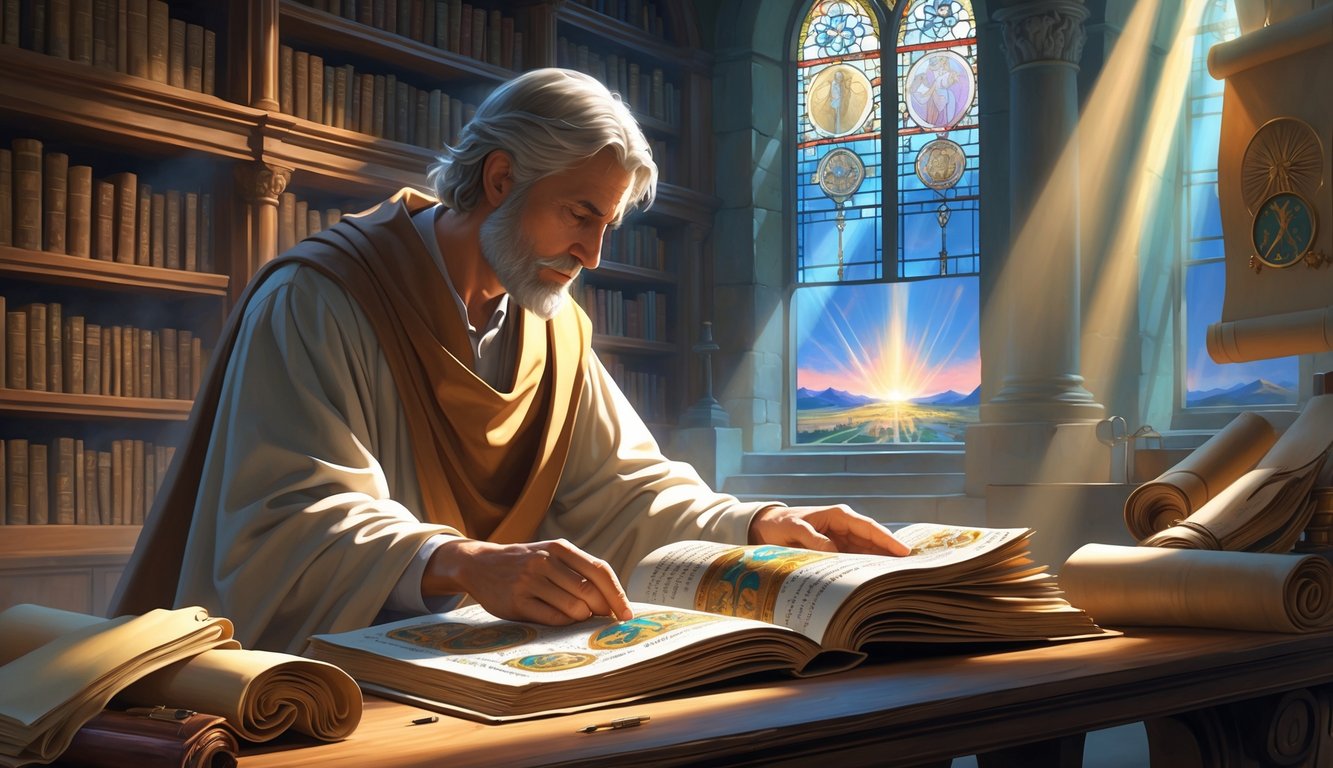
Many people avoid Revelation because of its complex symbols and prophetic language. Its purpose is to encourage faithfulness and perseverance.
It speaks to the struggles of its original audience and to challenges people face today. Understanding its historical background, structure, and main themes can help make its meaning clearer.
The book moves from letters to the seven churches to visions of a new heaven and earth. Revelation gives a broad view of God’s justice and redemption.
Learning how to read its symbols and prophecies can give deeper insight. Guides like this overview of Revelation can help.
Authorship and Historical Background
The Book of Revelation is closely linked to its writer’s identity and the time it was written. It reflects the struggles of early Christians under Roman rule and addresses specific communities in Asia Minor.
The Apostle John’s Role
Early Christian tradition says the Apostle John wrote Revelation. He also wrote the Gospel of John and the letters of John.


Some scholars question this, pointing out differences in style and vocabulary.
John wrote Revelation while exiled on the island of Patmos. He received visions from Jesus and recorded them for believers.
These visions include messages for the seven churches of Revelation in Asia Minor.
John introduces himself simply as “John,” a servant and witness of Jesus. He shares what was revealed to him, not new teaching.
His eyewitness experience gave his message authority among early Christians.




Historical Context and Persecution
Revelation was written during the reign of Emperor Domitian (A.D. 81–96). At this time, emperor worship was enforced in the Roman Empire.
Christians who refused to honor the emperor as a god faced punishment. In the Roman province of Asia, where the seven churches were located, pressure to join imperial cult rituals was strong.
Refusing could mean loss of property, imprisonment, or even death.
This climate of persecution shaped Revelation’s tone. John used symbolic language to talk about God’s victory and to warn and encourage believers to stay faithful despite opposition.
Purpose and Audience
Revelation was sent to seven Christian communities: Ephesus, Smyrna, Pergamum, Thyatira, Sardis, Philadelphia, and Laodicea. These were real cities in Asia Minor, each with its own strengths and struggles.
The letters to the seven churches offer praise, correction, and warnings. They address false teaching, moral compromise, and endurance under trial.
John wanted to strengthen the faith of these churches. He reminded them that Jesus is Lord over all powers and that perseverance brings reward.
His message still speaks to readers who face challenges to their faith today.
Key Themes and Messages in Revelation

Revelation shows God’s rule over history, the final defeat of evil, and the promise of a renewed creation. It reveals how Jesus Christ’s authority shapes the future and guides those facing trials.
The Sovereignty of God and Jesus Christ
Revelation opens by declaring Jesus Christ as “the ruler of the kings of the earth” (Revelation 1:5). This means that, no matter how chaotic things seem, God and His Son remain in control.
The visions show Jesus as the Lamb who was slain but now lives. This symbolizes His victory through sacrifice.
His authority covers nations, history, and the final judgment. Believers see this in scenes of worship around God’s throne.
Angels, elders, and living creatures praise Him for His power and justice. Every event serves God’s purpose and fulfills His promises.

For more on this focus on Christ, see the key themes in Revelation.
Prophecy and Spiritual Warfare
Revelation is a prophetic book. It reveals what will happen in the end times and speaks of judgments, the rise of evil powers, and the final battle between good and evil.
The book uses images like beasts, dragons, and plagues to show spiritual conflict. These represent real struggles between God’s kingdom and opposing forces.
This spiritual warfare is not only about the future. It also describes the ongoing struggle believers face in a world that resists God’s ways.
Prophecy here prepares people for what’s to come. It calls people to faithfulness, knowing that God will win in the end.
The prophetic visions of Revelation help readers see God’s plan during conflict.
Perseverance and Hope for Believers
Revelation was written to Christians facing persecution. It urges them to stay faithful even if they face hardship or death.
The letters to the seven churches in chapters 2 and 3 praise perseverance and warn against spiritual compromise. Those who “overcome” are promised rewards like eternal life and a place in God’s kingdom.
Hope appears in the final vision of the new heaven and new earth. God wipes away every tear, and death is gone.
This promise gives strength to endure trials. The victory of Christ ensures that suffering will not have the last word.
Structure and Symbolism of the Book
Revelation follows a clear prophetic order and uses a layered style to present visions. The book repeats certain themes through numbered cycles and draws from earlier biblical writings to explain its symbols.
Cycles of Seven: Seals, Trumpets, and Bowls
Revelation organizes its prophecy into three main series of judgments: the seven seals, the seven trumpets, and the seven bowls. Each set builds on the previous one, moving from warning to final judgment.
The seven seals begin with conquest, war, famine, and death. The sixth seal brings cosmic disturbances, and the seventh leads into the trumpets.
The seven trumpets announce disasters like hail and fire, poisoned waters, and darkened skies. The final trumpet signals the coming of God’s kingdom.
The seven bowls pour out God’s wrath in rapid order, including plagues, darkness, and great earthquakes. These cycles are not always in strict order. John includes interludes between them to add messages and visions.
Symbolic Language and Imagery
Revelation uses vivid symbols to describe spiritual truths and future events. Beasts stand for kingdoms or rulers, often hostile to God’s people.
Numbers have meaning—seven often means completeness, and twelve points to God’s people.
Other images include dragons, locusts, and signs in the sky. Trumpets, seals, and bowls are symbols of stages in God’s plan.
Colors have meaning, too: white for victory or purity, red for war, black for famine, and pale for death.
Many scenes take place in heaven, with thrones, elders, and angels. These visions mix worship and judgment, giving warning and hope, as explained in symbolism-focused studies.
Connections to the Old Testament
Much of Revelation’s imagery comes from the Old Testament prophets. The visions of beasts and kingdoms echo the book of Daniel, especially Daniel 7’s four beasts from the sea.
The plagues and judgments are similar to those in Exodus. The calls to repentance sound like the warnings of Jeremiah.
Prophetic symbols like measuring the temple, eating a scroll, and cosmic signs appear in books such as Ezekiel, Isaiah, and Zechariah. These links help readers see that Revelation continues the same prophetic tradition.
By drawing on these earlier texts, Revelation connects its message to God’s promises and warnings. This shared language would have been familiar to its first readers and grounds its visions in a known biblical framework.
Letters to the Seven Churches

In Revelation 1–3, John records messages from Jesus to seven churches in Asia Minor, now part of modern-day Turkey. These letters address real congregations in the first century and talk about faithfulness, sin, endurance, and repentance.
They combine praise, correction, and promises for those who stay steadfast.
Messages to Ephesus, Smyrna, and Pergamum
The church in Ephesus is praised for hard work and perseverance but warned for losing its first love for Christ. They are told to repent and return to their earlier devotion or risk losing their lampstand.
Smyrna faces persecution and poverty yet is called spiritually rich. Jesus encourages them to remain faithful even to death, promising the crown of life.

Pergamum lives in a city “where Satan has his throne,” likely meaning strong pagan influence. They hold to their faith, but some follow false teachings.
They are urged to reject these errors and stay true to the gospel.
| Church | Praise | Warning | Promise |
|---|---|---|---|
| Ephesus | Perseverance | Lost first love | Eat from tree of life |
| Smyrna | Spiritual wealth | Imprisonment ahead | Crown of life |
| Pergamum | Holding faith | False teaching | Hidden manna, white stone |
Warnings and Encouragements
The letters often follow a set pattern: description of Christ, praise, rebuke, call to repent, and promise to the faithful.
Warnings include spiritual complacency, tolerating false teaching, and moral compromise. Some churches hear that they are dead despite outward activity, or lukewarm in their devotion.
Encouragements promise eternal rewards. Believers receive assurance of safety in God’s kingdom, white garments of purity, and a place in the book of life.
Lessons for Modern Readers
Though addressed to first-century congregations, the seven churches of Revelation offer timeless lessons. Churches today still face challenges like false teaching, moral compromise, and loss of spiritual passion.
Believers can learn to value truth, endure hardship, and keep their faith active. The call to “hear what the Spirit says to the churches” applies to every generation.
Modern readers can use these letters as a spiritual checklist:
- Stay faithful under pressure
- Reject false teaching
- Repent when needed
- Hold fast to Christ’s promises
Major Events and Prophetic Visions
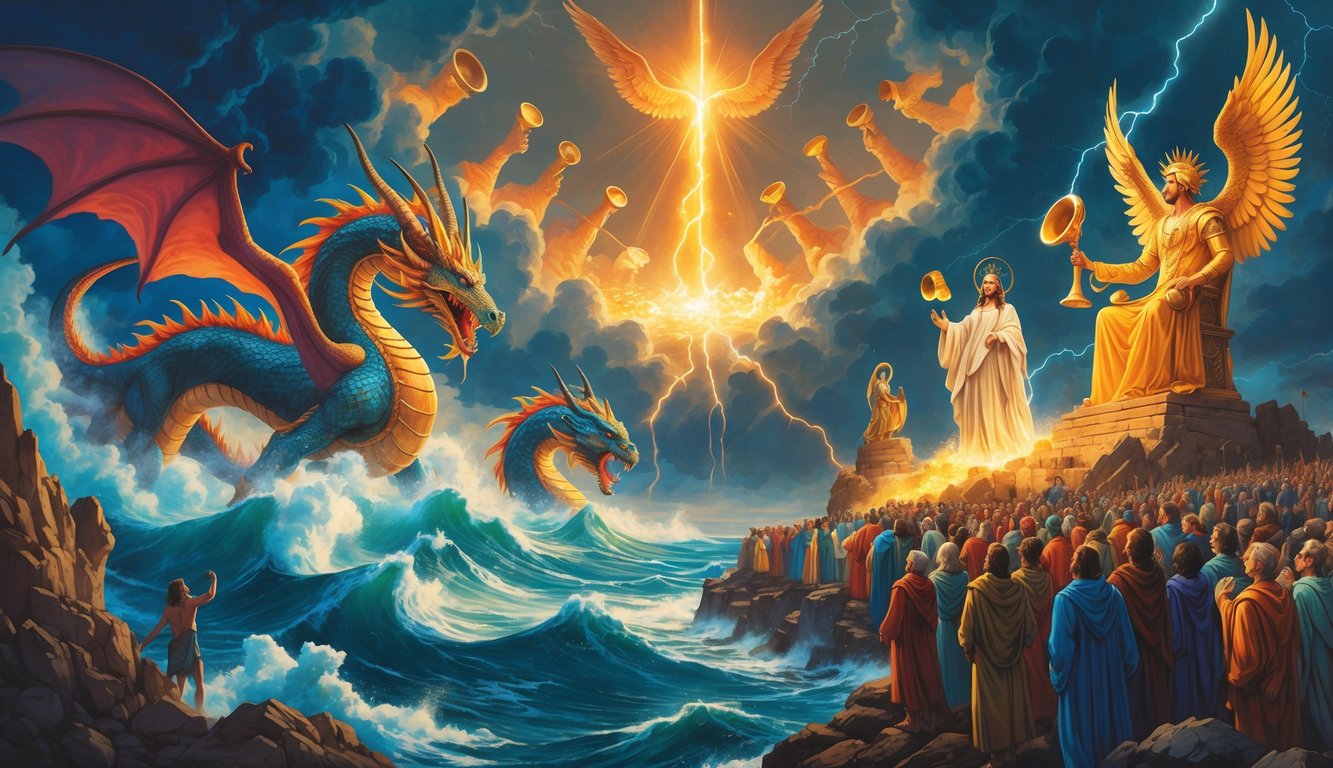
The Book of Revelation describes a series of visions that reveal future events tied to God’s plan for the world. These include times of great hardship, the rise of evil powers, and the final acts of God’s justice before a renewed creation.
The Rapture and Tribulation
Many Christians believe the rapture will occur before a period of severe hardship called the tribulation. In this event, believers are taken to be with Christ, leaving others to face years of turmoil.
The tribulation is often described as lasting seven years. It includes wars, famine, natural disasters, and widespread deception.
According to biblical accounts, these events are part of God’s judgment on a rebellious world. During this time, false prophets and corrupt leaders gain influence.
Many turn away from faith, while others face persecution for their beliefs. The period ends with the return of Christ to confront evil directly.
Key points:
- Believers taken in rapture
- Seven years of tribulation
- Widespread suffering and deception
Rise of the Beasts and the Fall of Babylon
Revelation describes two symbolic beasts. The first wields political power, while the second promotes false worship and deception.
Together, they represent corrupt systems under Satan’s influence. The beasts demand loyalty, often symbolized by the “mark of the beast.”
Those who refuse face economic and social exclusion. These events lead to the fall of Babylon, a symbol of a corrupt world system opposed to God.
The fall of Babylon is depicted as sudden and complete. Nations mourn its destruction, but heaven celebrates the end of its injustice and immorality.
Notable features:
- Political and religious deception
- Mark of the beast
- Sudden collapse of Babylon
Final Judgment and God’s Wrath
After the defeat of the beasts, the final judgment takes place. All people stand before God to be judged based on their deeds.
Those not found in the Book of Life face eternal separation from Him. God’s wrath appears through a series of plagues, earthquakes, and cosmic events.
These judgments respond to unrepentant rebellion against God. Satan is cast into the lake of fire, ending his influence over the world.
This marks the close of human history as described in Revelation and the beginning of a new heaven and new earth.
Main events:
- Judgment before God’s throne
- Execution of God’s wrath
- Defeat of Satan and evil forever
The Second Coming and the New Creation
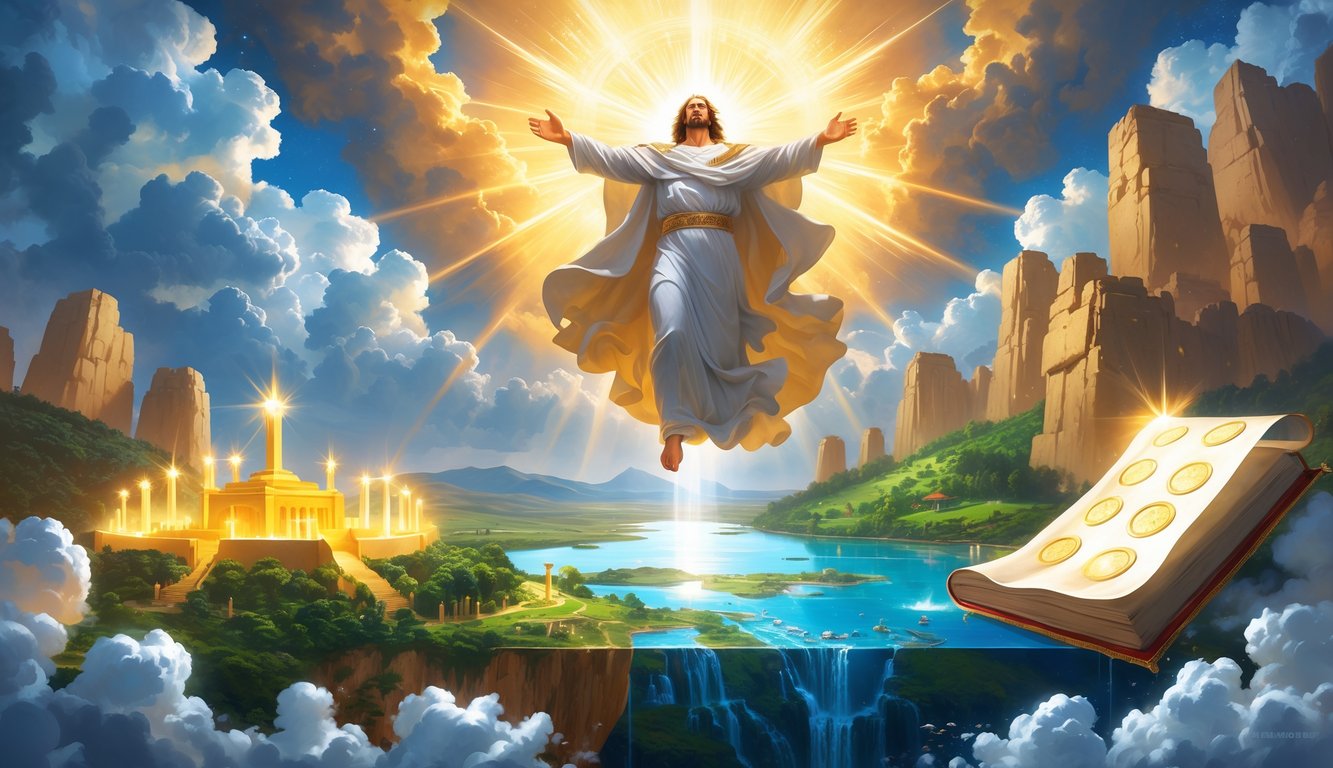
The book of Revelation describes a future moment when Jesus will return, bringing justice and restoring creation. It also presents a vision of a transformed world where God lives with His people forever.
Return of Jesus Christ
Revelation 19 shows Jesus returning as a conquering King. He comes on a white horse, with eyes like fire, wearing many crowns.
His name is called The Word of God. Angels accompany Him, and the armies of heaven follow.
This is not a hidden event—Revelation 1:7 says every eye will see Him, even those who opposed Him. This return fulfills the promise found throughout the New Testament, mentioned in 23 of its 27 books.
It marks the defeat of evil powers and the beginning of His reign on earth. For believers, this event is a moment of hope.
For those who reject Him, it is a time of accountability. The message is that His coming will be visible, decisive, and final.
Establishment of the New Heaven and New Earth
After the final judgment, John describes a new heaven and new earth in Revelation 21:1. The old world, marked by sin and death, passes away.
In this renewed creation, there is no more pain, mourning, or death. God dwells with His people in a restored relationship.
The New Jerusalem comes down from heaven, shining with beauty and perfection. Its gates are always open, and nothing impure enters.
This vision is permanent. The new creation fulfills God’s promise to make all things new, restoring what was lost in the beginning.
For readers, this offers a concrete picture of the future: a physical and spiritual renewal where God’s presence is constant and unhindered.
Eternal Rewards and Hope for Believers
Believers are promised eternal life in God’s presence. Revelation describes rewards such as access to the tree of life, a place in the holy city, and the privilege of seeing God’s face.
These rewards come through faith in Christ. They reflect God’s grace and His desire to dwell with His people forever.
The vision of angels, worship, and unending joy reinforces the hope that sustains believers in trials. It assures them that their faith has a lasting and tangible outcome.
For them, the second coming is not a cause for fear but a promise of restoration, peace, and eternal fellowship with God.
Approaches to Interpreting Revelation
Readers often face challenges when studying Revelation because it mixes prophecy, visions, and symbolic imagery. How someone interprets this book can change how they understand its message about Jesus Christ, the church, and future events.
Literal vs. Symbolic Interpretation
Some readers take a literal approach, treating descriptions in Revelation as direct statements of events. For example, if the text says “a thousand years,” they believe it means exactly one thousand years.
Others use a symbolic approach, seeing numbers, creatures, and events as representing spiritual truths or historical patterns. For instance, the “beast” in Revelation 13 may be viewed as a symbol for oppressive political power rather than a single person.
Many scholars recommend a balanced view. They suggest reading literally unless the text clearly uses figurative language.
This method uses a consistent hermeneutic approach, which treats Scripture plainly while recognizing symbolic visions when context demands it.
Role of Context and Scripture
Interpreting Revelation requires careful attention to historical context. The Apostle John wrote it during the late first century, likely under Roman rule, which influenced the imagery and themes.
Cross-referencing other parts of the Bible helps decode symbols. Many images in Revelation draw from Daniel, Ezekiel, Zechariah, and the teachings of Jesus.
For example, the lampstands in Revelation 1 are explained within the chapter as representing churches. Cultural background also matters.
Understanding first-century Jewish and Roman customs can clarify meanings that modern readers might miss. The letters to the seven churches in chapters 2–3 gain depth when studied alongside the real conditions of those cities, as noted in the preterist approach.
Common Interpretive Frameworks
There are four main approaches used by Bible students:
| Framework | Main Focus | Timeframe Applied |
|---|---|---|
| Preterist | Past events in the first century | Historical |
| Historicist | Church history from the first century to present | Ongoing |
| Idealist | Timeless spiritual principles | All eras |
| Futurist | Future end-time events | Yet to come |
Each framework shapes how prophecy is read. For example, the futurist approach sees most of Revelation as predictions about the end times.
The idealist approach views the visions as symbolic lessons about good and evil in every age. Many readers blend these frameworks, using parts of each to better grasp the book’s layered message.
Relevance and Application for Today
The book of Revelation offers clear guidance for how believers can respond to challenges, hold on to faith, and make choices shaped by God’s promises. Its messages address both personal conduct and the larger hope of God’s future plan.
Spiritual Lessons for Modern Christians
Revelation reminds Christians that faith is not only about belief but also about action. The letters to the seven churches urge believers to reject compromise, remain faithful, and keep their focus on Christ.
It calls for repentance when faith grows cold and for courage when truth is unpopular. This applies to modern life where distractions, false teachings, and moral pressures can pull people away from God.
The book also teaches the importance of worship. In Revelation, worship centers on God’s holiness and Christ’s victory.
This focus helps Christians keep priorities in order, especially when culture promotes self-centered values. By studying its warnings and encouragements, believers can develop a faith that is steady, informed, and ready for both ordinary challenges and the end times.
Endurance During Difficult Times
Revelation was written to Christians facing persecution. It shows that perseverance is possible even when life feels uncertain or dangerous.
The visions of trials, conflict, and the apocalypse are balanced with images of God’s control over history. This helps readers trust that suffering is temporary and that justice will come.
Believers are urged to remain faithful until the end, even if that means loss or hardship. The promise of Christ’s return is meant to strengthen endurance, not fear.
Practical steps for endurance include:
| Step | Action |
|---|---|
| 1 | Stay connected to Scripture and prayer |
| 2 | Support and encourage other believers |
| 3 | Remember God’s past faithfulness |
| 4 | Focus on eternal rewards, not temporary pain |
These habits help Christians face both personal struggles and global uncertainty with steady faith.
Living in Light of Revelation’s Promises
Revelation ends with the vision of a new heaven and new earth where God dwells with His people. This promise shapes how believers live today.
Knowing that God will remove death, sorrow, and pain motivates Christians to live with hope and compassion. It encourages them to invest in what lasts forever instead of chasing short-term gain.
The book also calls for readiness. Jesus will return, but no one knows when.
This means living each day with integrity and generosity. Believers focus on God’s mission as they wait for His promises to be fulfilled.