
The letters in Revelation 2 and Revelation 3 show how Jesus spoke directly to seven churches in Asia Minor through the apostle John. Each message addressed real strengths, real struggles, and clear calls to change.
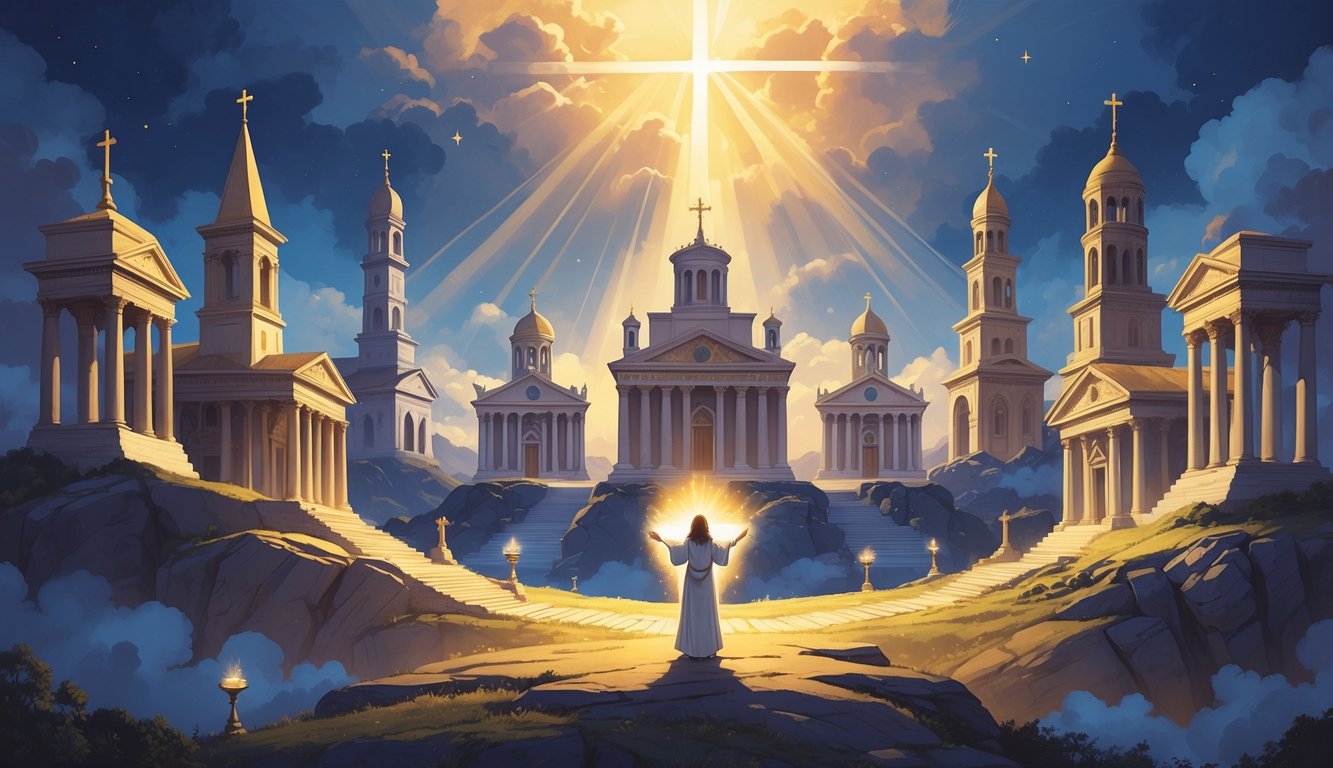

The book of Revelation describes Ephesus, Smyrna, Pergamum, Thyatira, Sardis, Philadelphia, and Laodicea. Some churches stayed faithful under pressure, while others became complacent or compromised.
Each letter follows a structure of praise, correction, and promise. This pattern helps readers see both encouragement and warning, as shown in the messages to the seven churches.

By studying these letters, people can find lessons for modern life. The call to return to a “first love”, to stand strong in trials, and to resist spiritual apathy is still important today.
Understanding the Seven Churches of Revelation
The letters in Revelation chapters 2 and 3 address real congregations in the first century. They also give timeless guidance for Christian communities today.
Each message reflects the local setting, spiritual condition, and relationship between the church and Christ.
Historical Background of Asia Minor
The seven churches were in the Roman province of Asia, in what is now western Turkey. These cities—Ephesus, Smyrna, Pergamum, Thyatira, Sardis, Philadelphia, and Laodicea—were important trade and cultural centers.
John the Apostle wrote Revelation while exiled on the island of Patmos. He recorded a vision of Jesus standing among seven golden lampstands, which represented the seven churches, and holding seven stars, symbolizing their messengers or “angels.”


Each church, or ecclesia, had unique strengths and weaknesses shaped by its city’s history, economy, and religious life. For example, Ephesus was known for its harbor and the Temple of Artemis. Laodicea was a wealthy banking center.
These local factors influenced the challenges and temptations the believers faced.
Purpose and Structure of the Letters
The letters to the seven churches follow a clear pattern. Each begins with a description of Christ from John’s vision in Revelation 1.
Next come words of commendation, correction, and a call to repent or remain faithful. Most letters end with a promise to those who “overcome” and an appeal to listen to what the seven spirits say to the churches.

The messages were not only for each congregation but also for all believers who would hear them. For example, the letter to Smyrna praises endurance under persecution. The one to Sardis warns against spiritual complacency.






This structure makes the encouragements and warnings both personal and universal.
Spiritual Significance for Modern Readers
The seven churches were real communities in the first century, but their messages carry spiritual significance for people today. Many see them as representing common conditions within churches across history.
Believers can learn from the faithfulness of Smyrna or Philadelphia. They can also learn from the needed corrections to Ephesus, Pergamum, or Laodicea.
Warnings against false teaching, moral compromise, and lukewarm devotion still matter. Some interpret the churches as symbolizing different eras of church history, while others see them as timeless portraits of the Christian walk.
The call to listen, repent, and remain faithful applies to any ecclesia today, just as it did in Asia Minor.
For more detail, see this overview of the seven churches in Revelation.
The Message to Ephesus: Returning to First Love
The church at Ephesus received praise for its endurance and commitment to truth. Yet, it was warned about a loss of its first love.
This message in Revelation 2:1-7 highlights both faithful service and the need for heartfelt devotion.
Commendations and Concerns

The message begins with Christ addressing the angel of the church in Ephesus. Ephesus was a major city in Asia Minor, known for the Temple of Diana and for being a center of trade and culture.
Early Christian work here appears in Acts 19 and Acts 20. The believers were commended for their hard work, perseverance, and refusal to tolerate false apostles.
They tested teachings carefully and endured hardship without giving up. However, Christ pointed out a serious concern—they had left their first love.
Their service had become more about duty than about love for Christ. Their faith was active, but their affection and devotion had grown cold.
The Call to Repentance and the First Works
Christ’s instruction was clear: Remember, repent, and do the first works. Remembering meant thinking about the early days of their faith when love for God and others was strong.

Repentance required a change in heart and action. It was not only about feeling sorrow but also about turning back to the right path.
The first works likely referred to acts of love, hospitality, and personal devotion that marked their early ministry. Without returning to these, Christ warned He would remove their lampstand—symbolizing the church’s witness and place among His people.
Lessons for the Church Today
The experience of the church at Ephesus gives practical guidance for modern believers. A church can be doctrinally sound and hardworking, yet still drift from genuine love for Christ.
Key takeaways include:
- Doctrinal purity must go with heartfelt devotion.
- Remembering one’s spiritual beginnings can renew passion.
- Repentance is an active step, not just an emotion.
Like Ephesus, churches today can guard truth yet risk losing warmth in their faith. The challenge is to balance truth, service, and love so that all three remain strong.
The Messages to Smyrna, Pergamum, and Thyatira

These three churches each faced unique challenges in their cities. One endured severe persecution, another struggled with cultural compromise, and the third tolerated harmful false teaching.
The guidance they received still speaks to issues of faith, loyalty, and moral courage.
Smyrna: Faithful Amid Persecution
The believers in Smyrna lived under pressure from both Roman authorities and hostile local groups. They faced poverty, yet Jesus called them spiritually rich.
He acknowledged their suffering and warned that more trials were coming. Some would be imprisoned, and their faith would be tested.

They were urged to remain faithful even to death. The promise was clear: the overcomer would not be hurt by the second death.
This message encouraged courage over fear. It reminded them that eternal life outweighed temporary pain.
Smyrna’s example shows that perseverance under persecution is a mark of a faithful witness.
Pergamum: Holding Fast in a Compromised Culture
Pergamum (also called Pergamos) was a center of Roman rule and pagan worship. The church there lived “where Satan’s throne is,” likely a reference to its many temples.
They had remained loyal to Christ, even after one of their own, Antipas, was killed for his faith. Yet, some followed the teaching of Balaam, which encouraged idolatry and sexual immorality.
Jesus called them to repentance. If they refused, He would confront them with the sword of His mouth.
The reward for the overcomer was symbolic: hidden manna and a white stone with a new name. This promised spiritual nourishment and personal acceptance from Christ.
Their challenge was to keep faith without blending it with the surrounding culture’s values.
Thyatira: Confronting False Teaching
The church in Thyatira was known for love, service, faith, and endurance. Yet, they tolerated a woman symbolically called Jezebel, a false teacher who misled believers into immorality and idolatry.
Jesus warned that judgment would come if there was no repentance. Those who followed her ways would face severe consequences.
Believers who resisted her teaching were told to hold fast until His return. The overcomer would be given authority over the nations and the morning star.
This message stressed the need to confront error within the church. Tolerance of harmful teaching, even in a loving community, can lead to spiritual ruin.
For more historical background on these churches, see this overview of the seven churches in Revelation.
The Messages to Sardis, Philadelphia, and Laodicea

These three churches each faced different spiritual conditions—ranging from near spiritual death to steadfast faithfulness to dangerous complacency.
Sardis: The Call to Wake Up

The church in Sardis had a reputation for being alive, but Christ declared it spiritually dead. Many in the visible church there were not walking in genuine faith.
He urged them to wake up and strengthen what remained before it died completely. This points to a small faithful remnant who had not soiled their garments.
White garments symbolized purity and salvation. Those who overcame would walk with Christ in these garments, showing they belonged to the body of Christ.
The warning included a call to remember what they had received, obey it, and repent. If they failed, judgment would come unexpectedly—like a thief in the night.
Philadelphia: Enduring with Faithfulness
The believers in Philadelphia received no rebuke from Christ. They had little strength yet kept His word and did not deny His name.

He promised them an open door that no one could shut. This symbolized secure access to the kingdom of God, based on their faithfulness.
They needed to hold fast so that no one would take their crown. This crown represented the reward for enduring in faith until the end.
Christ promised to make them pillars in the temple of God. This pictured stability and belonging in the eternal city.
Laodicea: Overcoming Lukewarmness
Laodicea was wealthy and self-reliant. Yet Christ said it was lukewarm—neither hot nor cold.
He counseled them to buy refined gold from Him, white garments to cover their shame, and salve to heal their spiritual blindness. These were pictures of true spiritual riches and salvation.
Laodicea’s problem was complacency. They thought they had everything, but in reality, they lacked what mattered most—fellowship with Christ.
Christ stood at the door and knocked, offering restored relationship to anyone who heard His voice and opened the door. Those who overcame would sit with Him on His throne, sharing in His victory and reign.
Themes and Symbols in Revelation 2-3

The letters in Revelation 2-3 use clear imagery and specific symbols to convey spiritual truths. These symbols connect to Christ’s authority, the role of the church, and the eternal rewards promised to faithful believers.
The Role of the Angel of the Church
Each letter begins by addressing “the angel of the church” in a specific city. Many scholars believe this refers to a spiritual messenger or the leading elder of that congregation.
The Greek word angelos means “messenger.” In this context, it could be a heavenly being representing the church before God, or a human leader responsible for delivering Christ’s message.
The angel acts as the point of contact between Jesus Christ and the congregation. Christ communicates His instructions in an orderly way.
By addressing the angel, the letters emphasize accountability. Whether the angel is a spiritual being or a church leader, the message is meant for the entire body of believers.
The Meaning of the Seven Stars and Lampstands
In Revelation 1:20, Jesus explains the meaning of these symbols. The seven stars are the angels of the seven churches.
The seven golden lampstands represent the churches themselves. The Son of Man is pictured holding the seven stars in His right hand.
This shows His authority and protection over the churches and their messengers. The lampstands, or candlesticks, symbolize the church’s role in shining God’s light in a dark world.
A lampstand does not produce light on its own—it holds the light. The image reminds believers that the church’s purpose is to reflect the light of Christ, not its own glory.
If a church fails in this role, Jesus warns that its lampstand can be removed.
Promises to the Overcomer
Each letter ends with a promise to “the one who overcomes.” The term overcomer refers to believers who remain faithful despite trials or persecution.
These promises are specific and rich in meaning. Examples include eating from the tree of life (Ephesus), receiving a crown of life (Smyrna), and having one’s name written in the book of life (Sardis).
Some promises point to eternal fellowship with God, such as sitting with Christ on His throne (Laodicea). Others involve protection from the second death or receiving a new name.
Applying the Messages of the Seven Churches Today

The letters in Revelation 2–3 address real churches in the first century. They also speak to modern faith communities.
They highlight the need for sound teaching, sincere love, and a willingness to turn back to God when spiritual decline sets in. These messages carry both encouragement and caution for believers in every era.
Lessons for the Body of Christ
The seven churches in Asia Minor faced challenges still present in Christendom today. Some, like Ephesus, held firmly to truth but lost their first love.
Others, like Smyrna, endured suffering with faith and courage. Church history shows that periods of revival often came when believers returned to the teachings of Christ and the apostles in Acts.
The Reformation, for example, sought to restore the priesthood of all believers and renew focus on Scripture. Modern churches can learn from this by balancing doctrine with genuine fellowship.
Paul’s letters in 1 Corinthians stress unity and mutual care. A healthy body of Christ values truth while practicing love, avoiding division, and serving with humility.
Practical steps include:
- Teaching sound doctrine while encouraging personal devotion.
- Prioritizing fellowship that builds trust and support.
- Serving the community as a witness of Christ’s love.
Warnings Against False Teaching and Compromise
Several churches, like Pergamum and Thyatira, tolerated false teaching. This weakened their witness and led to moral compromise.
In 1 John, believers are urged to test every spirit to see if it is from God. False teaching often distorts the gospel or promotes practices contrary to Scripture.
In church history, such errors have caused deep division and spiritual harm. The historicist interpretation of Revelation sees these warnings as applying across the ages, including the end times.
To guard against compromise, churches should:
- Measure teaching against Scripture for accuracy.
- Avoid alliances that require abandoning biblical truth.
- Encourage accountability among leaders and members.
These safeguards help the church remain faithful in a culture that often pressures believers to conform.
The Call to Repentance and Spiritual Renewal
Jesus called several churches, including Sardis and Laodicea, to repent. Repentance is not only for initial conversion but also for restoring fellowship with God when faith grows cold.
In Revelation’s prophetic context, this call holds spiritual significance for every generation. Renewal often begins with honest self-examination and prayer.
Returning to God’s Word also plays a key role.
Practical renewal can include:
- Confessing sins and seeking forgiveness.
- Reviving worship with sincerity and focus.
- Recommitting to service in the church and community.
Throughout Scripture, from the prophets to the early church in Acts, repentance led to restored joy and strength in the Lord.
For more on how these messages can guide modern believers, see this guide on how to apply the messages to the seven churches.
