
Revelation 19 gives a vivid picture of the moment when heaven opens and Christ returns in power and authority. Jesus comes as a righteous judge and victorious king who defeats evil and establishes His rule.
This is not a hidden event but a public display of His glory. All will witness His return.

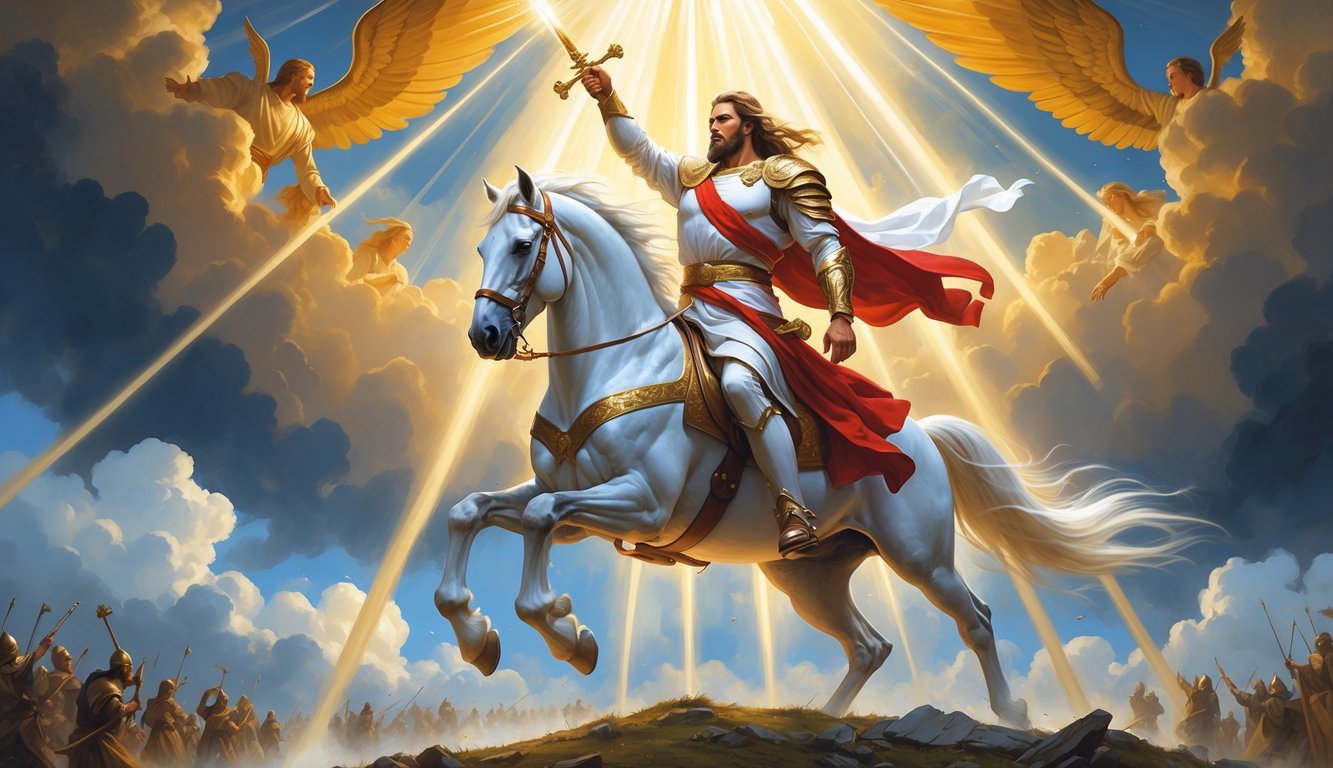
The vision describes Him on a white horse, called Faithful and True. He has eyes like fire and many crowns on His head.

His robe is dipped in blood, and His name is The Word of God. Behind Him, the armies of heaven follow, clothed in white and ready to share in His triumph.
This passage records the defeat of the beast, the false prophet, and the kings of the earth. Their rebellion ends, and Christ’s unchallenged reign begins.
The events in Revelation 19:11-21 reveal the certainty of His victory and the justice of His judgments.
The Second Coming of Christ in Revelation 19
Revelation 19 describes the visible return of Jesus Christ to earth as a conquering king. He defeats His enemies, ends the rule of evil powers, and establishes His righteous reign.
The chapter also shows a shift from judgment on Babylon to the triumph of the Messiah.


Prophetic Fulfillment and Significance
The Second Coming in Revelation 19 fulfills prophecies from both the Old and New Testaments. Zechariah 14:3-4 and Matthew 24:30 speak of the Messiah returning in power and glory.
Here, Jesus appears as the “Faithful and True” rider on a white horse, judging and making war in righteousness. His robe dipped in blood points to His role as the divine warrior who brings justice.
This event ends the current world order. It is not a gradual change but a real, visible return.
Believers see it as a promise kept, while it signals judgment for those who oppose Him. The title “King of Kings and Lord of Lords” in verse 16 affirms His supreme authority over all rulers and nations.
Key Events and Sequence

Revelation 19:11-21 presents a clear sequence of events.


- Heaven opens – John sees Jesus on a white horse, prepared for battle.
- The armies of heaven follow – clothed in fine linen, likely representing the saints and angels.
- The sharp sword – symbolizing the power of His word to judge and strike nations.
- The beast and the false prophet – captured and thrown alive into the lake of fire.
- The rest of the enemies – slain by the sword from His mouth.
His victory is decisive and complete. Evil powers are removed, and Christ’s reign begins without delay.
Contrast with Previous Chapters
Chapters 17 and 18 focus on the fall of Babylon, which represents corrupt world systems. These chapters show God’s judgment on false religion, greed, and moral decay.
Revelation 19 shifts from judgment to triumph. The tone changes from lament over Babylon’s destruction to celebration of Christ’s victory.
While Babylon’s fall is indirect, brought about by God’s will through various means, the Second Coming is direct and personal. Jesus Himself takes action and confronts His enemies face-to-face.
This contrast highlights the difference between God’s judgment on systems and His final judgment on individuals and armies who oppose Him. It also underscores the personal nature of His return, as described in Revelation 19:11-21.
Heaven Opened: The Triumphant Return
John’s vision describes a moment when the barrier between heaven and earth is removed. Jesus Christ arrives as a victorious leader, ready to judge and act with justice.
His appearance, titles, and actions reveal his authority and purpose.
The Vision of Heaven Opened
John writes that he saw heaven opened, revealing a scene not hidden by clouds or distance. This is a direct unveiling, showing that what happens next comes from God’s authority.

The open heaven signals that divine action is about to take place. It is not a symbolic doorway—it is a real event in the vision, marking the start of Christ’s return.
This moment also connects to earlier parts of Revelation where heaven opens to reveal God’s throne. Here, the focus is on movement from heaven to earth, showing that the time for judgment and victory has arrived.
The White Horse and Its Rider
From the open heaven comes a white horse. In the ancient world, a white horse often represented triumph and purity.
This is not the humble donkey of Jesus’ first coming but a warhorse, ready for action. The rider is Jesus Christ, coming not in weakness but in power.
He rides at the head of a heavenly army, as described in Revelation 19:11-21. His role is clear: to wage war in righteousness.
The white horse emphasizes both the victory he will achieve and the justice of his cause. This is not conquest for personal gain but a final, rightful defeat of evil.
Faithful and True: Titles of Christ
The rider’s name is Faithful and True. These titles show his complete reliability and honesty.
He judges without error and keeps every promise he has made. In this vision, his eyes are described as a flame of fire, symbolizing insight that sees all motives and actions.
He wears many crowns, showing his unmatched authority over all nations and powers. Another title given is The Word of God.
This connects to his identity as the one who perfectly reveals God’s will. Every title reinforces that his return is both certain and just, and that his authority cannot be challenged.
The Appearance and Authority of Christ
John’s vision in Revelation 19 shows Jesus returning with unmistakable signs of His identity and power. His clothing, eyes, and crowns all carry meaning that points to His role as judge, warrior, and rightful ruler.
Each detail communicates His authority and His mission.
Robe Dipped in Blood and Its Symbolism
John sees Christ wearing a robe dipped in blood. This image appears in Revelation 19:13, where He is also called The Word of God.
The blood on the robe is often understood in two main ways:
- His own sacrificial blood from the cross.
- The blood of His enemies in judgment, similar to imagery in Isaiah 63:1–3.
The context of Revelation 19 suggests the second meaning fits the scene of battle. Christ returns to defeat the beast and the kings of the earth.
This detail shows that His victory is certain before the battle even begins. The blood-stained robe is a visible sign of His role as the one who brings final justice.
Eyes Like a Flame of Fire
Christ’s eyes are described as a flame of fire. This matches earlier visions in Revelation 1:14 and 2:18.
The description suggests penetrating vision—nothing can be hidden from Him. In this scene, His fiery eyes emphasize His role as a righteous judge.
He sees motives, not just actions. His judgment is based on truth, not appearances.
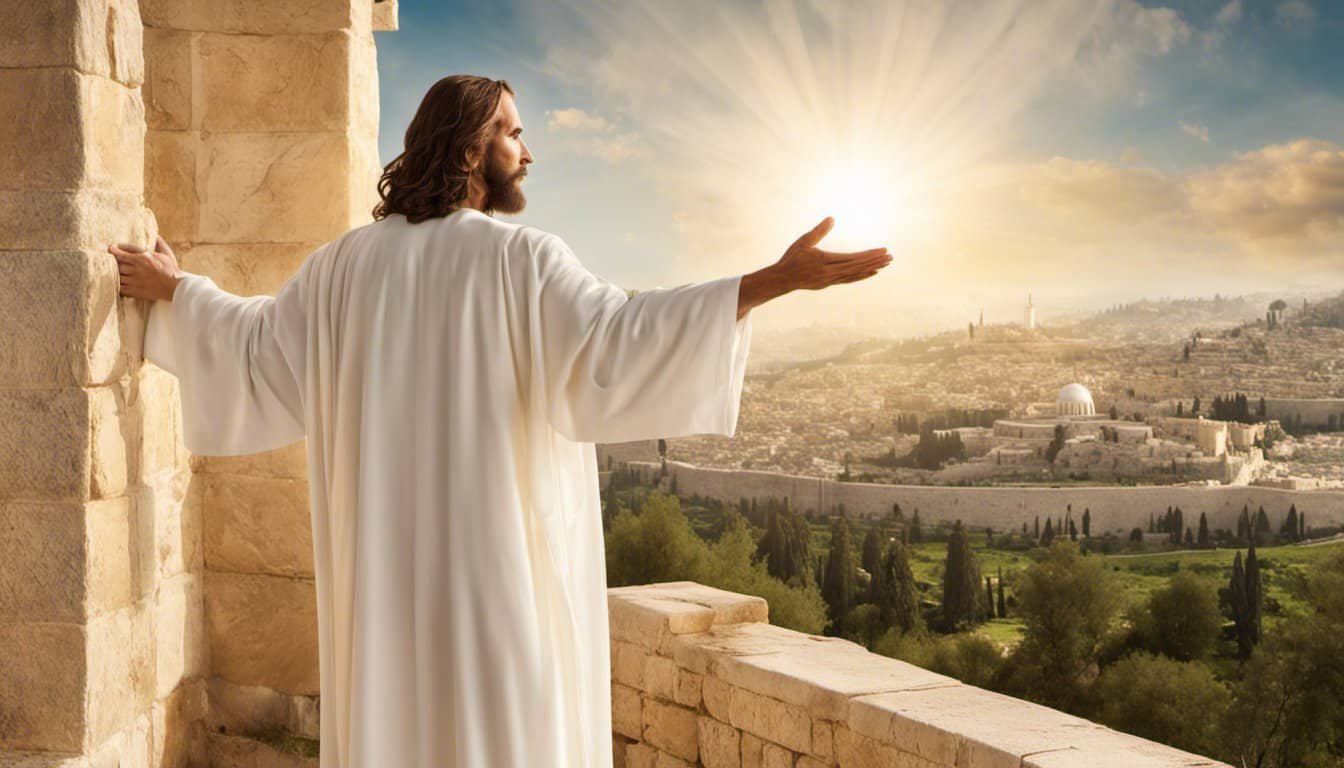
The flame also shows intensity and focus. In a world where many follow the beast, His gaze remains fixed on carrying out God’s will.
Many Crowns and Royal Names
On His head are many crowns, or diadems. In the ancient world, a crown signified authority over a realm.
Many crowns show that Christ holds authority over all kingdoms, not just one. He also bears names of power.
One name is known only to Himself, showing the depth of His identity. Another is written on His robe and thigh: King of kings and Lord of lords.
This title, seen in Revelation 19:16, declares His supreme rule. No earthly leader or spiritual power can rival Him.
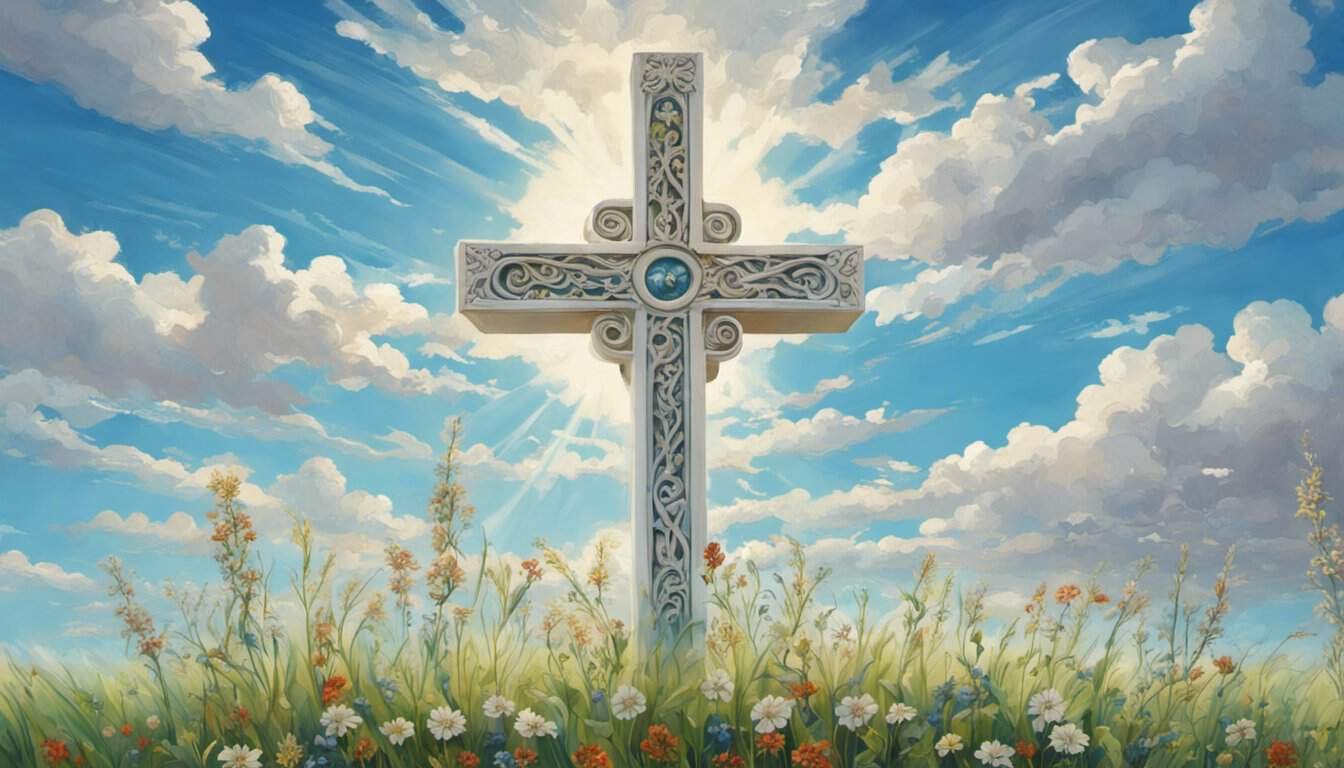
The combination of crowns and names makes His authority clear to all who see Him.
The Armies of Heaven and Their Role
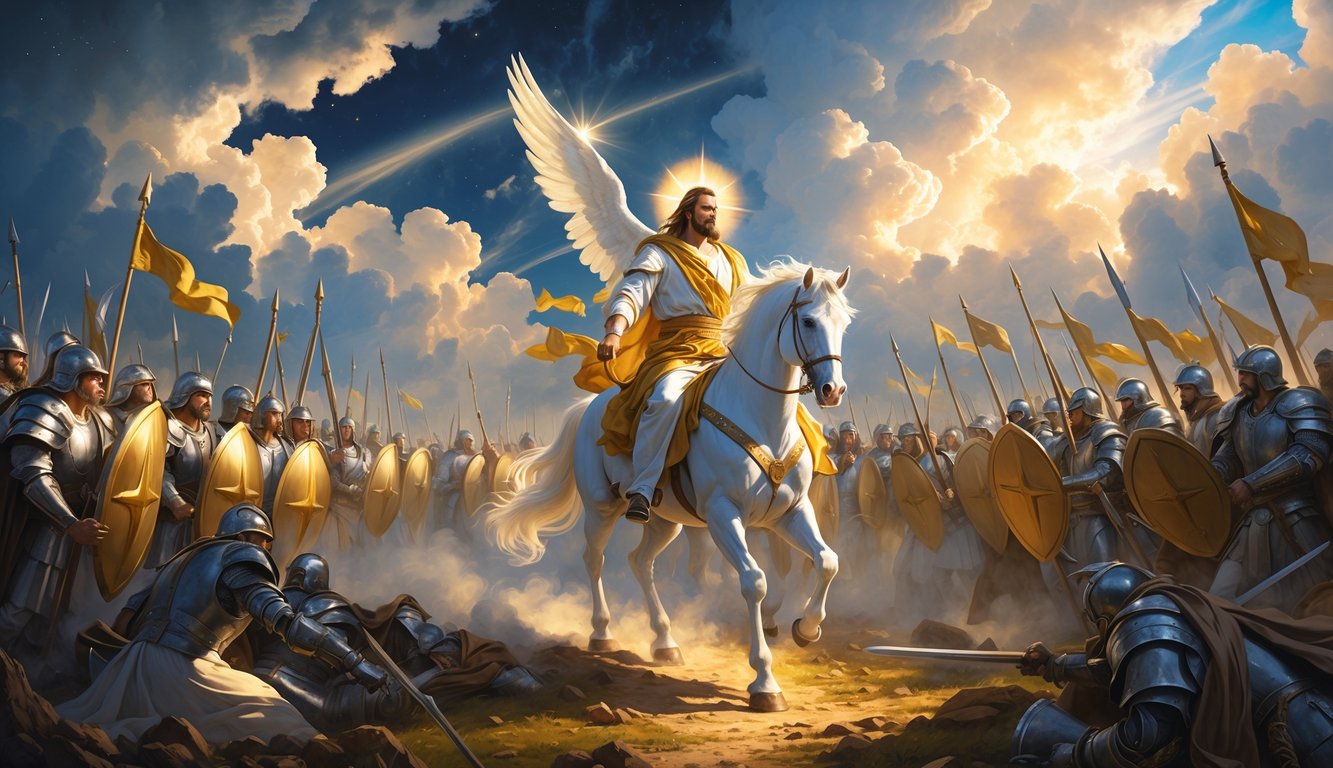
The vision in Revelation 19 shows Christ is not alone in His return. He is accompanied by a vast group that reflects purity, loyalty, and readiness for His mission.
Their appearance and actions highlight both their identity and their purpose in this moment.
Followers Clothed in Fine Linen
The armies of heaven wear fine linen, white and clean. This detail is found in Revelation 19:14 and points to character.
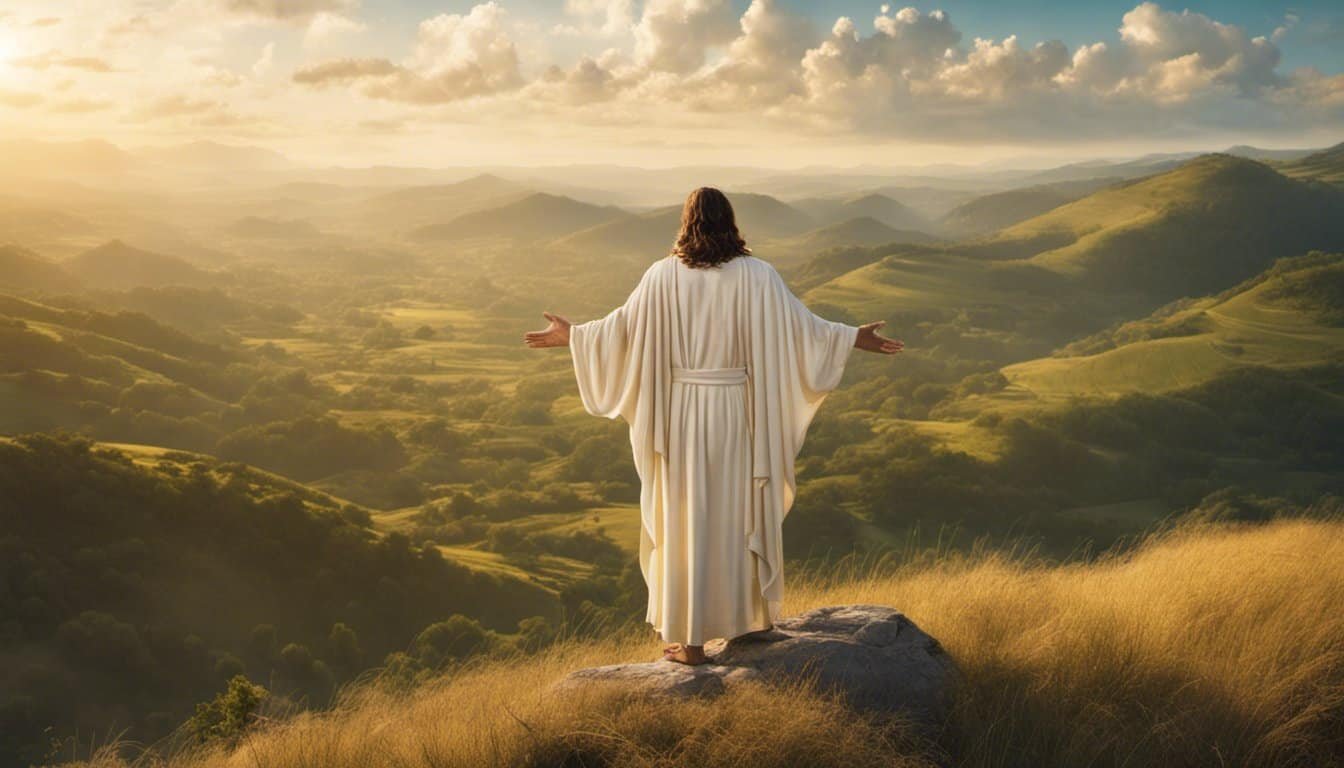
Fine linen in Scripture often symbolizes righteousness and moral purity. They follow Christ as willing participants in His mission.
Their garments show that they are set apart from corruption and sin. This purity is not earned by their own deeds but is given to them through Christ’s work.
The image is not one of soldiers dressed for a physical battle with armor and weapons. Instead, it is a picture of spiritual readiness and holiness.
Their clothing reflects their role as witnesses and participants in Christ’s victory.
The White Horses of the Armies
Each member of the heavenly armies rides a white horse. In the biblical context, white horses often symbolize victory, honor, and purity.

The use of white horses here matches the image of Christ Himself riding a white horse. This shared imagery shows unity between the leader and His followers.
They move together in purpose and in appearance. The horses are not symbols of speed or aggression, but of triumph and authority.
In the ancient world, a white horse was often used in a victory parade. The armies here are part of a victorious procession led by Christ.
Significance of Fine Linen
The fine linen is called “white and clean” in the text. In Revelation 19, this linen is a sign of the righteous acts of God’s people.
It is a visible mark of their spiritual state.
Fine linen was valuable in the ancient world and often linked to wealth and status. Here, it stands for something greater—purity given by God.
This clothing contrasts with those who oppose Christ, who are described in darker or defiled terms. The fine linen shows that the armies of heaven display righteousness as those already made clean.
Christ’s Righteous Judgments and Victories
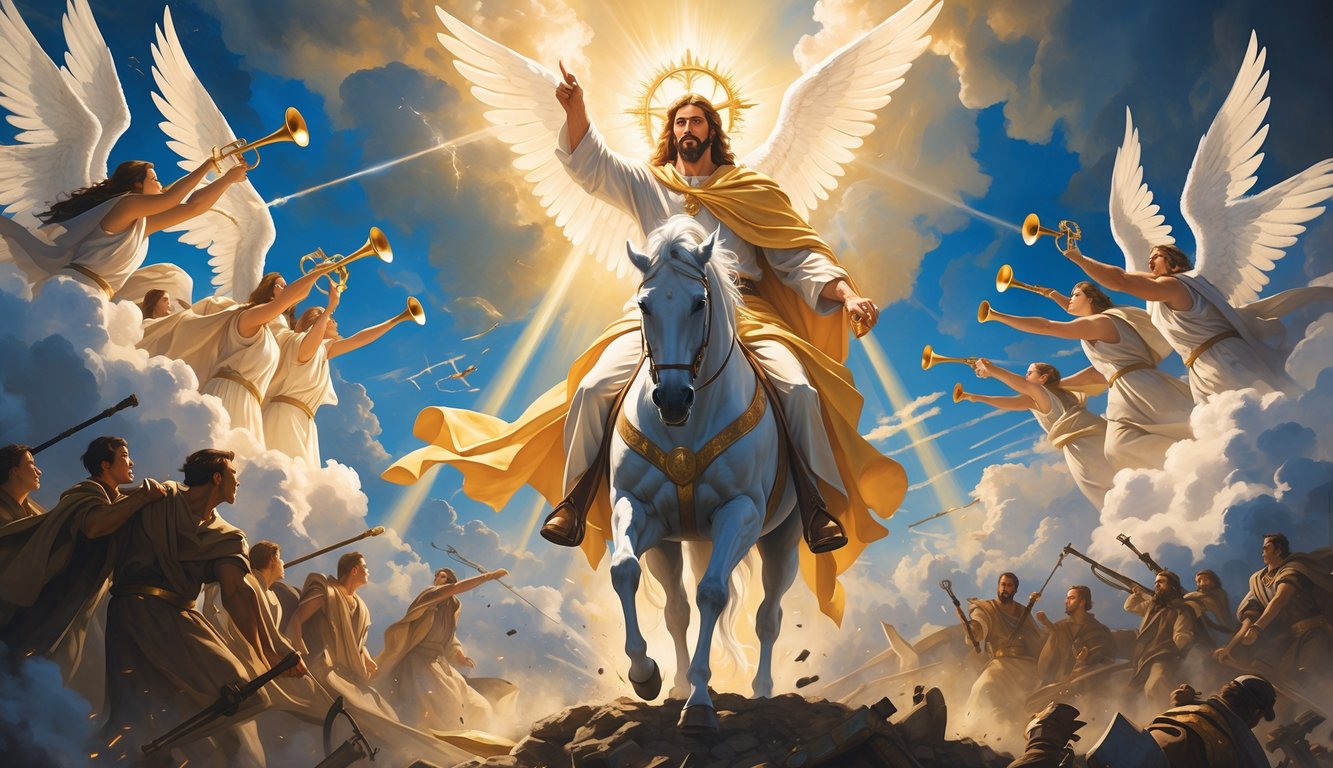
Jesus returns as a just ruler who acts with perfect fairness. He brings justice against evil and confirms His authority over all nations.
He bases every decision on truth and righteousness. There is no corruption or injustice in His rule.
Judging and Making War in Righteousness
In Revelation 19:11, John describes Christ as the One who “judges and wages war” in righteousness. His decisions are always right and fair.
He does not fight for selfish gain. He confronts evil to set things right.
His role as judge ensures that every wrong is addressed. Every act of rebellion is accounted for.
Key points about His righteous judgment:
- No partiality – He judges every person equally.
- Perfect knowledge – He sees all motives and actions.
- Moral authority – He uses God’s truth as the standard, not human opinion.
The Sharp Sword and Rod of Iron
John sees a sharp sword coming from Christ’s mouth. This sword is a symbol of His powerful word that brings judgment (see Revelation 19:15).
The sword stands for truth that exposes lies and condemns sin. His word carries out final sentences against the guilty.
The rod of iron shows His firm rule over the nations. It is unbreakable and enforces His decrees.
Rebellion will not be tolerated, and peace will be kept under His leadership. The sword and rod show that His reign is both just and strong.
Defeat of the Wicked
The vision in Revelation describes the final overthrow of all who oppose God. Christ leads the armies of heaven to confront the forces gathered against Him.
The wicked do not fall by chance or human power. Christ’s judgment is final, and His authority is absolute.
This defeat is total—leaders of rebellion are captured, and their followers face the consequences of their actions. As described in Revelation 19:19-21, no one escapes His verdict.
The Defeat of the Beast, False Prophet, and Kings of the Earth
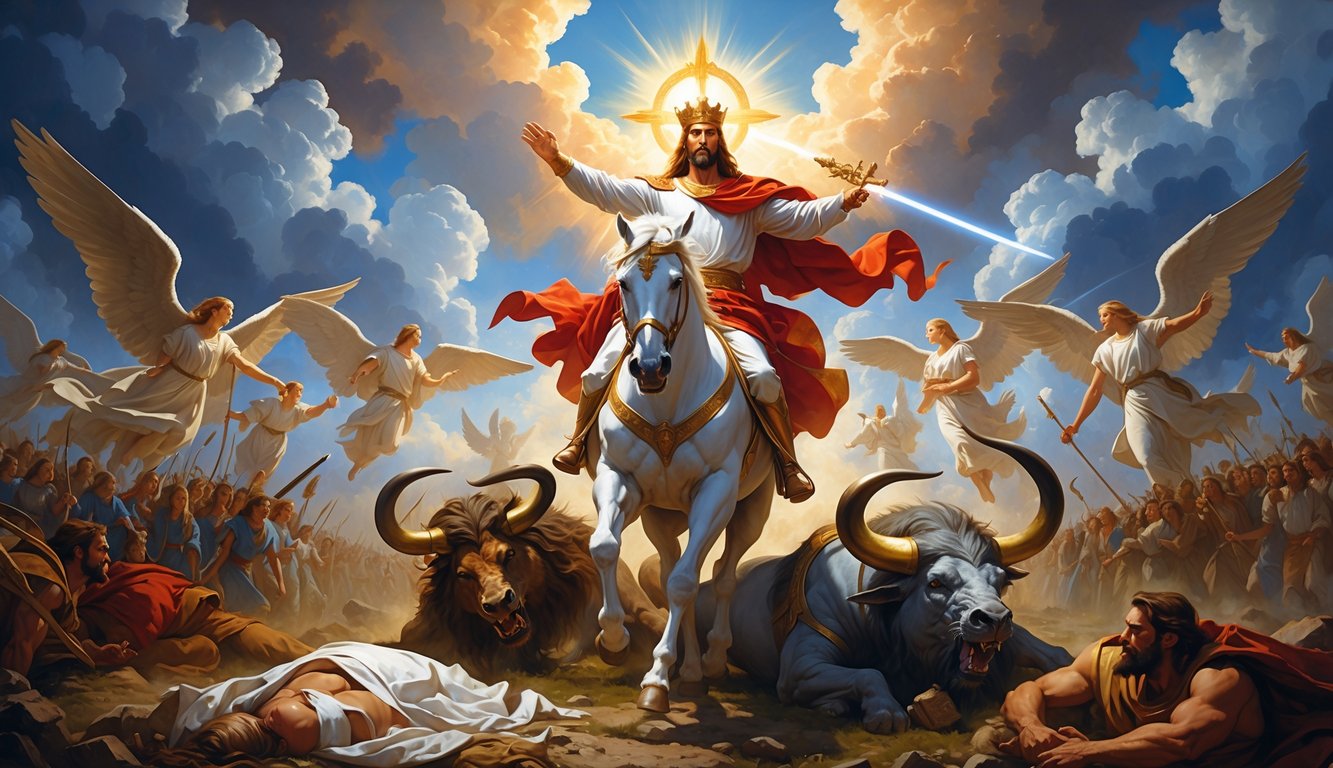
In the final conflict described in Revelation 19:17-21, opposing forces gather for open war against Jesus Christ and His heavenly army. The beast, the false prophet, and the kings of the earth face capture, judgment, and permanent removal from power.
Their defeat marks the end of their influence over people and nations.
The Gathering for Battle
The account in Revelation 19:19 describes the beast assembling with the kings of the earth and their armies. They unite to wage war against the rider on the white horse, who is Jesus Christ.
This gathering is a deliberate act of rebellion against God’s authority. The armies represent global political and military power aligned with the beast’s rule.
The scene shows a clear division: on one side, the forces of the beast; on the other, Christ and His army clothed in white. The text shows that the earthly forces do not doubt their cause, even though their defeat is certain.
Capture and Judgment of the Beast
Christ captures the beast alive during the confrontation. The text does not describe a long battle.
The capture is immediate, showing Christ’s absolute authority over His enemies. According to Revelation 19:20, the beast’s power came from deception, control, and opposition to God’s people.
His removal ends his ability to influence nations. The judgment is final.
Christ throws the beast directly into the lake of fire, a place of eternal punishment. This act shows that his rule will never return.
The Fate of the False Prophet
Christ also captures the false prophet alongside the beast. The false prophet performed signs and wonders for the beast, convincing people to accept the mark of the beast and worship its image.
These miracles were tools of deception, not acts of truth. As Revelation 19:20 notes, his influence led many into direct opposition to God.
Like the beast, Christ casts the false prophet alive into the lake of fire. Both leader and deceiver receive the same permanent judgment without delay or appeal.
The End of Earthly Kings
The kings of the earth stood with the beast and now face destruction after the battle. They aligned their power and armies with him and rejected God’s rule.
The rider’s sword, representing His word and authority, strikes them down. Their reign and influence come to an end.
Their armies fall with them. No earthly power remains to challenge Christ’s authority.
