
Catholic theology is a rich and profound aspect of the faith that shapes the beliefs and practices of millions around the world. At its core, this theology emphasizes the significance of sacraments as vital expressions of God’s grace, deeply rooted in tradition.
Understanding these elements provides insights into how the Catholic Church nurtures its members spiritually and strengthens their connection to God.

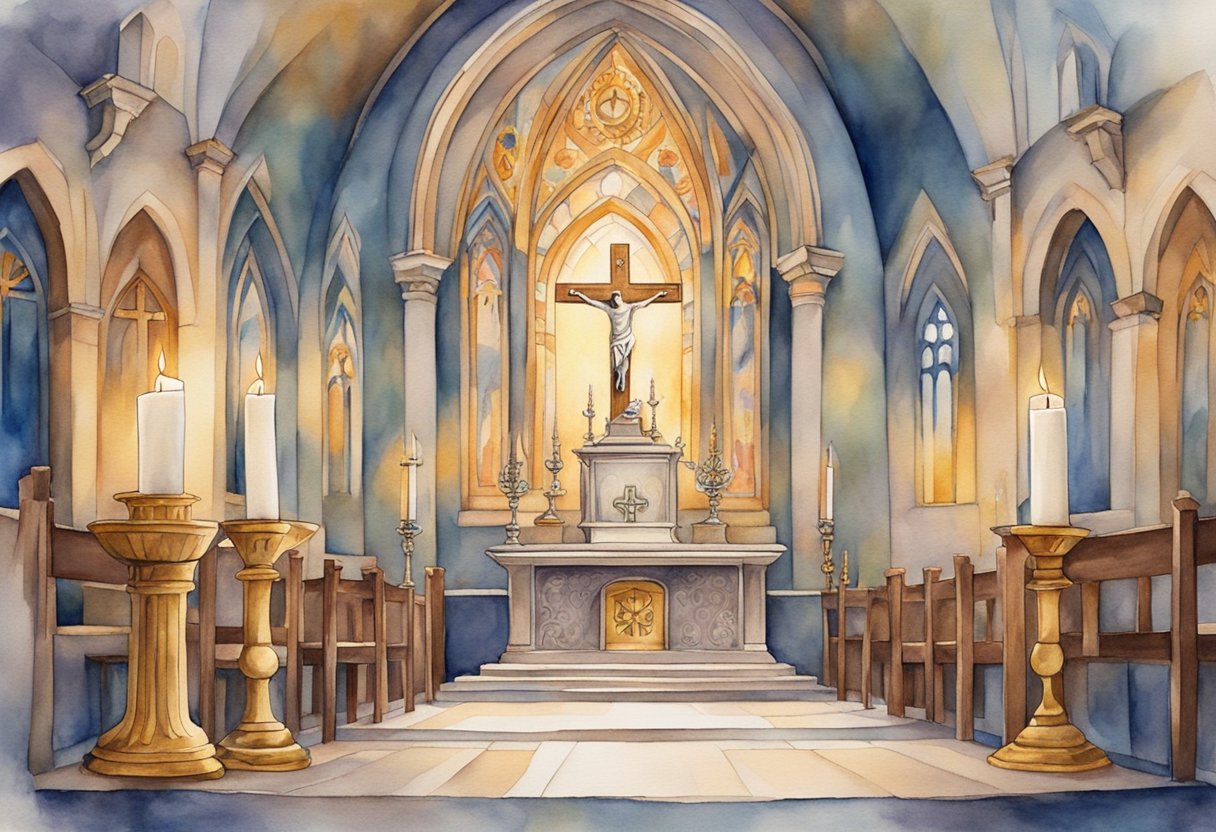
The sacraments serve as essential milestones in a believer’s spiritual journey. They are not only rituals but are also rooted in love and community, guiding individuals through important life events.

By exploring the history and development of these sacraments, one can appreciate how they have evolved and continue to foster an enduring faith.
As religious traditions adapt and grow, the essence of Catholic theology remains intertwined with its sacramental practices. This fusion inspires a sense of belonging and purpose within the Church, making it essential for both personal and communal faith celebrations.
Key Takeaways
- Catholic theology focuses on the role of sacraments in connecting believers to God’s grace.
- Sacraments are central to the Catholic faith, marking significant moments in the life of a Christian.
- The ongoing tradition of the Church helps to shape the spiritual lives of its members.
Understanding Catholic Theology
Catholic theology explores the faith and beliefs that shape the Church’s teachings. It emphasizes the importance of both Scripture and Tradition in understanding these beliefs.
The Concept of Theology in Catholicism
Theology in Catholicism refers to the study of God and His relationship with humanity. It helps believers understand their faith more deeply.
Catholic theology is guided by key doctrines, which are official teachings established by the Church. These doctrines address critical aspects of faith, such as the nature of God, the sacraments, and salvation.


This study encourages believers to think critically and ask questions. It allows them to explore how faith interacts with everyday life. Catholic theology is not just academic; it has practical implications for how people live their faith each day.
Authority of Scripture and Tradition
In Catholicism, authority comes from both Scripture and Tradition. Scripture includes the Bible, which is considered the inspired word of God.
Meanwhile, Tradition encompasses teachings passed down through generations. This includes the teachings of the Church Fathers and the decisions made at Church councils.
The relationship between these two sources of authority is essential. They complement each other and guide believers in their faith journey.

Catholics believe that both are vital for understanding God’s revelation. This dual authority helps them navigate faith and practice in a complex world.




History and Development of Sacraments
The understanding of sacraments has grown and changed throughout Christian history. This section explores their origins in the early church and highlights the importance of the seven sacraments in Catholicism today.
Origins in the Early Church
In the early church, the idea of the sacrament was linked to the concept of sacramentum, meaning a sign or symbol of divine grace. Early Christians practiced rituals like baptism and the Eucharist as vital parts of their faith. These rites were seen as ways to receive God’s grace and strengthen the community.
As time went on, these practices became more formalized. Church leaders, such as St. Augustine, emphasized the importance of these rituals in connecting believers with Christ.
By the 4th century, the church began to recognize specific sacraments that were essential for salvation.
The Significance of the Seven Sacraments
The Council of Trent in the 16th century officially defined the seven sacraments of the Catholic Church. These include:
- Baptism
- Eucharist
- Confirmation
- Penance
- Anointing of the Sick
- Holy Orders
- Matrimony
These sacraments serve as key spiritual milestones in a Catholic’s life. Each sacrament carries unique significance and grace.
For instance, the Eucharist is celebrated as a representation of Jesus’ Last Supper, while confirmation strengthens a person’s faith. Together, they offer a pathway for believers to connect with Mysterion, or divine mystery, in their spiritual journey.
Sacraments of Initiation

The Sacraments of Initiation are essential rites in Catholic theology. They serve as a foundation for a Christian’s spiritual journey. These sacraments transform individuals and deepen their faith, bringing them closer to God.
Baptism: Gateway to Life in the Spirit
Baptism is the first sacrament of initiation. It symbolizes rebirth and spiritual cleansing.
During baptism, a person is immersed in water, signifying the death of their old life and the beginning of a new life in Christ.
It is through faith and the grace of the Holy Spirit that individuals are welcomed into the Church. This sacrament also removes original sin, allowing the baptized to become members of the Christian community.
Infants and adults can receive baptism, but all candidates must express a desire for faith and community.
Confirmation: Strengthening the Holy Spirit Within

Confirmation is the sacrament that strengthens the grace received at baptism. Through the laying on of hands and anointing with oil, the confirmand receives the Holy Spirit in a deeper way.
This sacrament empowers individuals to live out their faith actively.
Candidates for confirmation are often prepared through faith education. They choose a sponsor to support their spiritual journey.
Confirmation also deepens one’s commitment to the Church and its mission. It invites individuals to share their gifts with others and stand firm in their beliefs.
Eucharist: The Source and Summit
The Eucharist is the culmination of the sacraments of initiation. It represents the body and blood of Christ, shared during Mass.
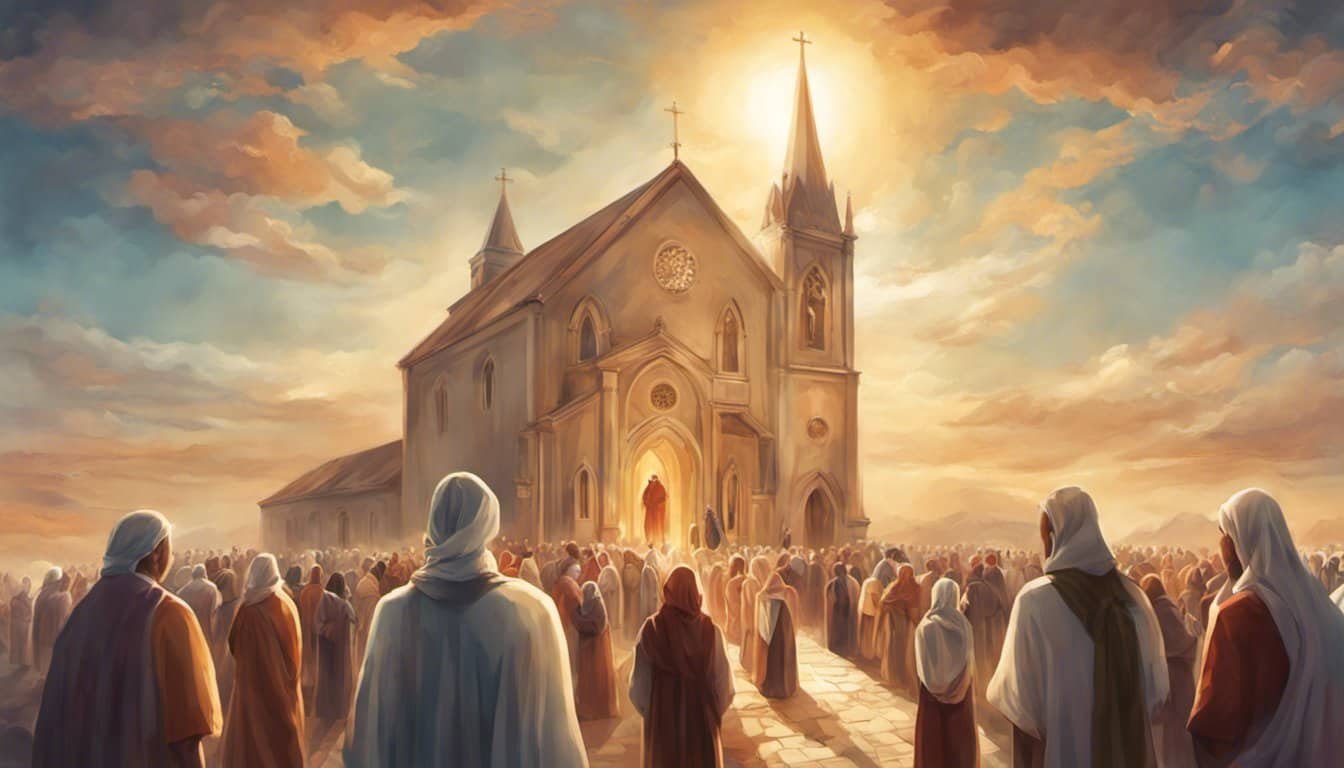
Participating in the Eucharist nourishes the spiritual life of a Christian.
Receiving the Eucharist connects individuals with Jesus and the community of believers. It is a moment of grace and unity.
Regular participation is vital for spiritual growth and helps deepen one’s faith. The Eucharist fosters a continuous relationship with Christ and reinforces the commitment to living according to His teachings.
Sacraments of Healing
The Sacraments of Healing play a vital role in Catholic theology. They offer believers opportunities for forgiveness and healing, both spiritually and physically. Two main sacraments of healing are Reconciliation and Anointing of the Sick.
Reconciliation: The Path to Forgiveness
Reconciliation, also known as Confession or Penance, is an essential sacrament in the Catholic Church. It allows individuals to seek forgiveness for their sins. Through this process, they acknowledge their wrongdoings and express true remorse.
The priest acts in the person of Christ and provides guidance and absolution. This sacrament promotes inner peace and strengthens one’s relationship with God.
It also fosters a sense of community by encouraging individuals to support each other in their spiritual journeys.
Steps to receive Reconciliation include:
- Examine Your Conscience: Reflect on your actions and behaviors.
- Confession: Share your sins with the priest.
- Penance: Complete any assigned prayers or actions.
- Absolution: Receive God’s forgiveness through the priest.
This sacrament is a powerful way to heal one’s heart and soul.
Anointing of the Sick: Comfort in Suffering
Anointing of the Sick is another important sacrament that brings comfort to those facing serious illness or old age. This sacrament provides both physical and spiritual healing.
During the ritual, a priest anoints the sick person with oil while praying for their strength and recovery. This act symbolizes God’s presence and care in their time of need. It offers hope and assurance to the sick, reminding them they are not alone.
Communal aspects are also vital. Family and friends often gather to support the person receiving the sacrament. This shared experience enhances the healing process, fostering deep connections.
Key elements of this sacrament include:
- Prayer: Offering prayers for healing.
- Anointing: Using holy oil on the forehead and hands.
- Community Support: Encouraging love and assistance from those nearby.
Through Anointing of the Sick, individuals find comfort in their struggles, strengthening their faith.
Sacraments at the Service of Communion
Sacraments at the Service of Communion help establish and strengthen the community within the Church. They focus on service and love, bringing individuals into deeper relationships with one another and with God.
Holy Orders: The Call to Serve
Holy Orders is a sacrament that ordains men to serve as priests, deacons, or bishops. This sacrament empowers them to lead the community in worship, provide spiritual guidance, and administer the other sacraments.
Clergy play an essential role in building the Body of Christ. They serve the church by preaching, teaching, and supporting the faithful in their spiritual journeys. Through Holy Orders, they commit themselves to a life of service and devotion.
The ordination process involves rigorous training, prayer, and the discernment of one’s call to the priesthood or diaconate. The focus is on creating a strong bond among community members and fostering faith through shared worship and service.
Matrimony: The Covenant of Love
Matrimony is a holy union between a man and a woman, reflecting God’s love. This sacrament signifies a lifelong commitment to support and nurture one another. Through Matrimony, couples become a source of grace for each other.
Marriage is not simply a contract; it is a covenant. It binds two individuals with the purpose of raising a family and fostering a loving community.
Married couples are called to give themselves fully to each other, forming a small Church within their home.
In their partnership, they share joys and challenges, always aiming to strengthen their bond. Their commitment reflects the love Christ has for His Church, providing a powerful example for others in the community.
Sacramentals and Devotionals

Sacramentals and devotionals play an important role in Catholic practice. They help Catholics grow in faith and connect with God in everyday life. These sacred signs and practices are designed to sanctify various moments and situations.
Nature of Sacramentals in the Catholic Church
Sacramentals are sacred signs instituted by the Church. They prepare individuals to receive the grace from the sacraments. Unlike sacraments, which are essential for salvation, sacramentals are blessings, prayers, and objects that aid in spiritual growth.
Examples include Holy Water, used for blessings and protection. It serves as a reminder of baptism and helps individuals focus on God’s grace.
Another common sacramental is the Sign of the Cross, which invokes the Holy Trinity and reminds Catholics of Jesus’ sacrifice.
Sacramentals are not magical; they work through faith. They direct a person’s heart and mind towards God, allowing for deeper sanctification.
Popular Devotions and Blessings
Catholicism is rich in popular devotions that enhance faith. These include the Rosary, novenas, and various prayers, each aimed at honoring God or specific saints.
Blessings are an important aspect of these devotions. They can be given by priests or laypeople and may involve rituals such as sprinkling Holy Water. These acts invite God’s grace into daily life.
The Rosary, for example, consists of meditating on the mysteries of Christ. This practice helps believers connect with Jesus and Mary in a personal way.
These rituals and prayers create a sense of community and a deeper relationship with God. They offer comfort and encourage spiritual growth in daily life.
Theological Concepts and Practices
In Catholic theology, key concepts like grace and faith play vital roles in understanding sacraments and their significance. These elements help believers grow closer to God and deepen their spiritual lives through the sacraments.
Grace: God’s Gift of Friendship
Grace is seen as a free gift from God that fosters a personal relationship between Him and believers. It enables individuals to engage in a life of faith and fulfill their spiritual potential.
There are different types of grace:
- Divine Grace: This is God’s unearned favor and love.
- State of Grace: A condition where a person is free from mortal sin.
- Sanctifying Grace: This operates continuously, helping the soul grow in holiness.
Through grace, believers experience regeneration and purification, moving towards spiritual wholeness and deeper friendship with God.
The Role of Faith in Sacramental Theology
Faith is essential in understanding sacraments. It is through faith that believers accept God’s grace and commit to living out the teachings of the Church.
Sacramental theology emphasizes that:
- Faith gives meaning to the rituals and symbols in the sacraments.
- It strengthens a person’s spiritual journey and relationship with God.
By participating in the sacraments with faith, they experience transformation and growth. This process not only involves receiving grace but also responding to God’s invitation for a deeper communion.
Ecumenical Perspectives
Ecumenical perspectives reveal how different Christian groups view sacraments and their significance. This section explores the beliefs of the Catholic Church in relation to the Orthodox and Protestant churches.
Comparing Catholic and Orthodox Views
The Catholic Church and the Orthodox Church share many beliefs about sacraments. Both traditions recognize seven sacraments, including baptism and the Eucharist. However, they differ in how they understand the role of tradition and the authority of the Church.
The Greek Orthodox Church emphasizes the economy of salvation, focusing on how God works through the sacraments to bring grace. They view the sacraments as essential for salvation and spiritual life.
While the Catholic Church believes in purgatory as a place of purification, the Orthodox perspective often focuses more on the transformative power of the sacraments without needing a concept of purgatorial suffering. This difference highlights their unique ecclesiology, or teachings about the Church.
Protestant Interpretations and Beliefs
Protestant churches have various interpretations of the sacraments. Many recognize only two sacraments: baptism and the Lord’s Supper. They often see these as symbols rather than channels of grace.
In general, Protestant beliefs shift away from the sacramental economy and emphasize personal faith and the authority of Scripture. For instance, some Protestant denominations view baptism as an act of obedience rather than a necessity for salvation.
Ecumenism plays a key role in dialogue among these groups. Efforts focus on finding common ground, such as the acknowledgment of baptism in most Protestant denominations. This opens pathways for cooperation and shared worship, fostering unity amid diversity.
The Catholic Church and Its Sacramental Economy
The sacramental economy of the Catholic Church plays a vital role in its theology and ecclesiology. It reflects how the Church understands and practices faith through the sacraments, linking doctrine with liturgical life.
Lex Orandi, Lex Credendi: The Law of Prayer is the Law of Faith
The phrase “Lex Orandi, Lex Credendi” means that the way the Church prays shapes what it believes. This principle highlights the connection between worship and doctrine.
When the Church celebrates the sacraments, it expresses its beliefs through rituals and prayers. These practices are rooted in tradition, connecting communities over time. This relationship emphasizes that faith is not just a set of beliefs but is embodied in the life of the Church.
For instance, in celebrating the Eucharist, the Church commemorates the Paschal Mystery—the passion, death, and resurrection of Jesus Christ. This sacrament focuses the community’s faith and reinforces their understanding of salvation.
Interplay between the Sacramental System and Catholic Doctrine
The sacramental system is essential for conveying Catholic doctrine. Each sacrament serves as a channel of grace, embodying key teachings of the Church.
For example, baptism signifies entry into the Church and the beginning of a new life in Christ. Through this sacrament, believers receive the initial gift of faith (Fides Qua), opening their hearts to a transformative relationship with God.
Further, the other sacraments—like Confirmation and the Eucharist—reinforce and deepen this faith. The doctrine of the Fides Quae, which represents the content of faith, is continually enriched through these experiences in the liturgical life.
The sacraments thus serve as both expressions and reinforcements of Catholic beliefs, creating a dynamic relationship between worship and doctrine that is foundational to the faith community.
Living the Sacraments Daily
Living the sacraments in daily life helps individuals connect more deeply with their faith. By incorporating these practices both personally and within the community, they can foster a spiritual atmosphere that emphasizes compassion and justice.
Incorporating Sacraments into Personal and Community Life
To live the sacraments daily, individuals can begin by reflecting on their significance. For example, Baptism symbolizes new beginnings, while Eucharist offers spiritual nourishment. Each sacrament can inspire daily actions.
Communities support this by organizing regular celebrations and gatherings. They can host Confirmation retreats or family events centered around the Eucharist. These activities encourage individuals to share experiences and deepen their faith together. Small groups might also meet to discuss how their lives reflect the values of the sacraments.
Prayer and liturgy form a backbone for sacramental life. Participating in these practices reinforces community bonds and personal faith. Daily prayers or scripture study can encourage ongoing reflection.
The Sacraments and Social Justice
The sacraments are not only personal moments, but they also enhance social justice efforts. They inspire individuals to serve others in their communities. For instance, the sacrament of Anointing of the Sick calls for compassion toward the ill and marginalized.
Many communities organize outreach programs grounded in the teachings of the sacraments. They might work with local shelters or food banks.
Through Matrimony, couples often volunteer together, promoting love and unity in service.
Advocating for justice can be an extension of living the sacraments. Inspired by the teachings of Christ and the grace received through the Eucharist, individuals engage in efforts that challenge inequality. They strive for a world where everyone can experience dignity and respect.
By embracing these values, the connection between faith and action becomes clear, guiding individuals to make a positive impact.
Cultural Expressions and the Sacraments
The sacraments in Catholicism are deeply intertwined with cultural expressions. They represent significant moments in life, reflecting both personal faith and community traditions. Understanding these connections can enhance one’s appreciation of Catholic practices and their impact on daily life.
Rites of Passage: From Birth to Death
Catholic sacraments mark critical rites of passage throughout a person’s life.
- Baptism is often the first sacrament received, welcoming individuals into the faith. It typically involves a water ceremony that signifies purification and new life.
- Confirmation strengthens this commitment, often celebrated in adolescence, where individuals affirm their baptismal vows and receive the Holy Spirit’s gifts.
- In adulthood, Matrimony and Holy Orders reflect lifelong commitments in marriage or service to the Church.
The sacraments continue through significant life events like Funerals, which honor the deceased and celebrate their passage to eternal life. Each rite not only impacts the individual but also reinforces community bonds within the Catholic Church.
Local Customs and Global Catholicism
Cultural expressions surrounding the sacraments vary widely across different regions.
In some cultures, Baptism may involve elaborate celebrations with family gatherings and traditions unique to that community. For example, in Latin American countries, a child’s Baptism might include a large fiesta, highlighting the joyful nature of the occasion.
In contrast, places with a strong monastic presence, like certain parts of Europe, may emphasize simpler, more reflective practices.
The rituals tied to Funerals also look different around the world. There are variations in music, prayers, and customs aimed at honoring a person’s life.
These differences reflect the richness of Catholicism. They show how the faith adapts to and enriches diverse cultures while maintaining its core beliefs and practices.
