
Revelation 6 describes a powerful vision where the Lamb opens the seven seals of a scroll. Each seal reveals a new event in God’s plan.
The opening of the first four seals introduces the Four Horsemen. These symbolic figures bring conquest, war, famine, and death.

These images have captured attention for centuries. They speak of real struggles humanity faces and the ultimate fulfillment of prophecy.
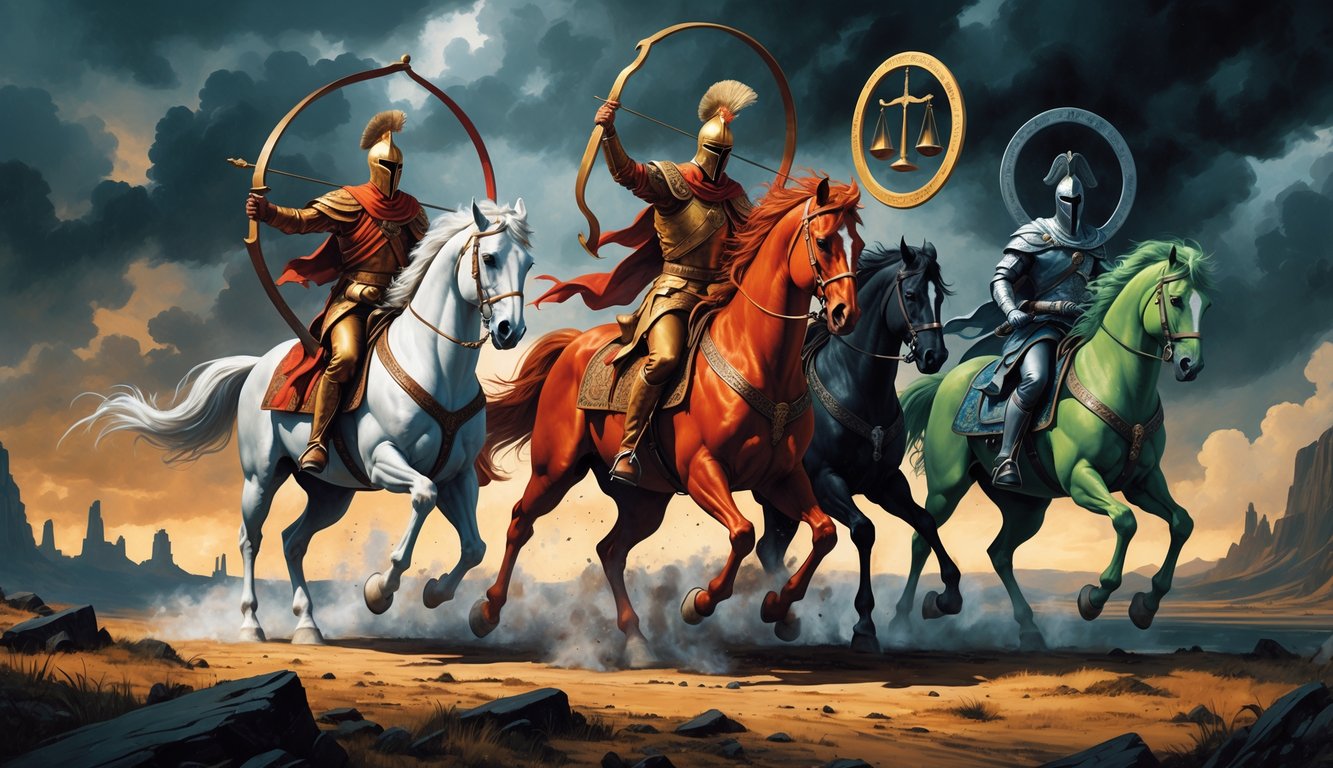

As the seals break one by one, the scene shifts from heavenly worship to judgment on the earth. The white, red, black, and pale horses each carry a message that connects to the larger story of the apocalypse.
In this vision, the events follow a divine order. This order shapes the rest of the book.
The Opening of the Seals: Setting the Stage
In Revelation 6, the breaking of the seals starts a sequence of events. These events reveal God’s justice and His call for repentance.
These moments show Jesus Christ’s authority and the meaning of the scroll. They also show how divine judgment works alongside mercy.
The Lamb’s Authority and Role
The Lamb, identified as Jesus Christ, is the only one worthy to open the seals of the scroll. His authority comes from His sacrificial death and resurrection.


In the Book of Revelation, John describes the Lamb taking the scroll from God’s hand. This act shows His unique role in carrying out God’s will for the world.
No angel, elder, or other being has this right. The Lamb’s role is to judge and also to guide the church.
His authority ensures that the coming events are part of a just plan. These events are not random acts.
This reminds readers that the One who gave His life for humanity carries out divine judgment.
The Significance of the Scroll
The scroll in God’s hand contains the details of His plan for the end times. It is sealed with seven seals, which means its contents are fully secured until the right time.






Each seal, when opened, reveals a specific stage of God’s unfolding work. The first four seals bring the Four Horsemen of the Apocalypse.
These horsemen symbolize conquest, war, famine, and death. The scroll represents divine justice and the certainty that God will complete His purposes.
It also serves as a reminder that God, not humans, controls history. The church can find comfort knowing that nothing in the scroll happens outside His timing.
Divine Judgment and Mercy
The opening of the seals signals the start of divine judgment. These judgments are not only about punishment but also about calling people to repentance.
God’s justice addresses sin. His mercy offers people a way to turn back to Him before the final judgment.
Even in hardship, the opportunity for repentance remains. This balance between judgment and mercy reflects God’s character.
God is both holy and loving. He ensures His actions are fair while still giving people space to respond.
The First Four Seals: The Four Horsemen Unveiled
When the Lamb opens the first four seals in Revelation 6, four riders appear. Each rides a different colored horse.

They represent conquest, war, famine, and death. Together, they bring events that affect nations through conflict, scarcity, and mortality.
The White Horse: Conquest and Deception
The first seal reveals a rider on a white horse. He holds a bow and wears a stephanos (victor’s crown).
This rider goes out “conquering and to conquer.” Some see him as a symbol of political or military conquest.
Others see him as a false messiah or Antichrist figure. He brings deceptive peace before destruction.
Unlike Christ—who also rides a white horse later in Revelation—this rider’s mission is domination, not salvation. His conquest may come without open war at first, using diplomacy, influence, or manipulation.
This phase sets the stage for the unrest that follows. It shows how power can be gained through persuasion and control before force becomes necessary.
You can read more about the first seal and the white horse in Revelation 6:1-2.
The Red Horse: War and Bloodshed
The second seal brings a rider on a red horse. He is given a great sword and the authority to take peace from the earth.
The red color points to bloodshed and violent conflict. This rider represents war—both between nations and within them.
Civil unrest, revolutions, and armed clashes fall under his influence. The text says people “kill one another,” showing how widespread violence becomes.
This is not limited to formal battles but includes personal and local conflicts. The rider on the red horse follows the deceptive conquest of the first rider.
He turns tension into open war. This stage shows how fragile peace can be once trust breaks down.
More details on the red horse and war appear in Revelation 6:3-4.
The Black Horse: Famine and Economic Hardship
The third seal reveals a rider on a black horse. He carries a pair of scales in his hand.
A voice speaks of the high price of wheat and barley—basic foods—while oil and wine remain untouched. The black horse symbolizes famine and economic hardship.
Scarcity drives prices up, making daily bread a struggle for ordinary people. The preservation of oil and wine may point to economic inequality.
Luxuries remain available to the wealthy while the poor face hunger. This rider shows how war and instability often lead to shortages and suffering.
The image of the scales reflects rationing and careful measurement of food. The black horse and famine appear in Revelation 6:5-6.
The Pale Horse: Death and Hades
The fourth seal brings a chilling image—a rider on a pale horse. The Greek word chloros means a sickly green, the color of decay.
The rider’s name is Death, and Hades follows close behind. They receive authority over a fourth of the earth to kill with sword, famine, pestilence, and by the beasts of the earth.
This shows a combination of causes—war, hunger, disease, and animal attacks. The pale horse represents the final result of the first three riders’ work—mass death.
The mention of Hades emphasizes the grave’s claim over its victims. This stage completes the pattern: conquest leads to war, war leads to famine, and famine leads to widespread mortality.
You can study the pale horse and Death in Revelation 6:7-8.
The Fifth Seal: Cry of the Martyrs
When the Lamb opened the fifth seal in Revelation 6:9-11, John saw the souls of believers who had been killed for their faith. They prayed for justice, asking God to act against those who had taken their lives.
God responded with a promise but also told them to wait.
The Souls Under the Altar
John described the martyrs as being under the altar in heaven. This image reflects the Old Testament altar of sacrifice, where the blood of offerings was poured out.
Their position shows that their lives were given as an offering to God. They had been slain for the word of God and for keeping their testimony.
This means they refused to deny their faith, even under threat of death. Many interpreters connect this scene with the persecution of Christians throughout history, including those during the early church.
The martyrs cried out, “How long, O Lord, holy and true, until You judge and avenge our blood?” This was not a cry for personal revenge but a prayer for God’s justice.
According to the Blue Letter Bible study guide, their plea reflects deep faith and a longing for God’s righteous judgment.
White Robes and Divine Justice
In response, each martyr received a white robe. In Revelation, white robes often symbolize purity, victory, and salvation.
This gift showed God’s acceptance of their sacrifice and His promise of eternal life. They were told to rest “a little while longer” until the full number of martyrs was complete.
This means God’s plan for justice would happen at the right time, not immediately. White robes also served as a visible sign of honor.
As noted in the Biblevise summary, these garments mark them as faithful witnesses who endured suffering but now stand in a place of victory before God.

The delay in judgment shows that God’s justice is certain but unfolds according to His timing.
The Sixth Seal: Cosmic Disturbances and Wrath
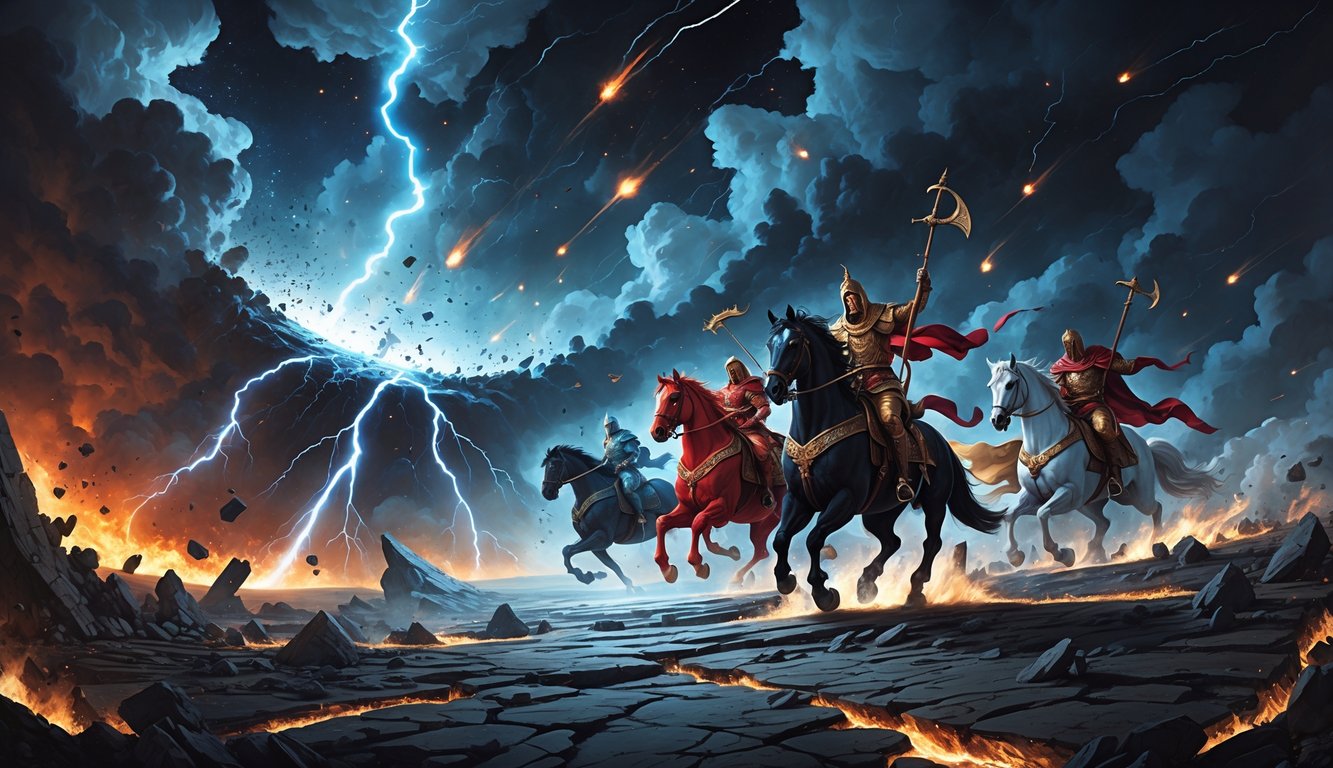
When the sixth seal is opened, the scene shifts to dramatic events in nature. People feel a deep sense of fear.
Physical signs in the earth and sky occur. These signs appear alongside a growing awareness of divine judgment.
The Great Earthquake and Signs in the Heavens
The opening of the sixth seal brings a great earthquake that shakes the land on a massive scale. This is followed by striking cosmic disturbances described in Revelation 6:12-14.
The sun turns black, and the moon appears blood red. Stars fall from the sky, which may refer to meteor showers or other visible space events.
The sky recedes like a scroll being rolled up, creating a sense of cosmic disruption. Mountains and islands shift from their places, showing the event’s reach across the earth.
These signs are tied to the prophetic timeline of the first six seals.
| Event | Description |
|---|---|
| Earthquake | Global shaking of land |
| Sun darkened | Appearance like sackcloth |
| Moon red | Blood-like color |
| Stars falling | Objects from the sky |
| Sky receding | Rolled up like a scroll |
These events point to what many call the Day of the Lord, a time of tribulation and upheaval. They mark a turning point from earlier seals, which focused on human conflict and suffering, to direct disruptions in creation itself.
The Wrath of the Lamb and Human Response
After the natural signs, people react with fear. Leaders, the wealthy, soldiers, and ordinary citizens hide in caves and among rocks, seeking shelter from what they call the wrath of the Lamb.
This phrase links the events to Jesus, portraying Him as both Savior and Judge. The reaction is one of fear and avoidance, not repentance.
People recognize the events as part of divine judgment. They say, “The great day of their wrath has come, and who can stand?”
This shows an awareness that the tribulations are not random disasters but part of a purposeful sequence.
The sixth seal stands apart by combining visible cosmic signs with a widespread human acknowledgment of God’s authority and coming judgment.
Interpretations and Theological Perspectives
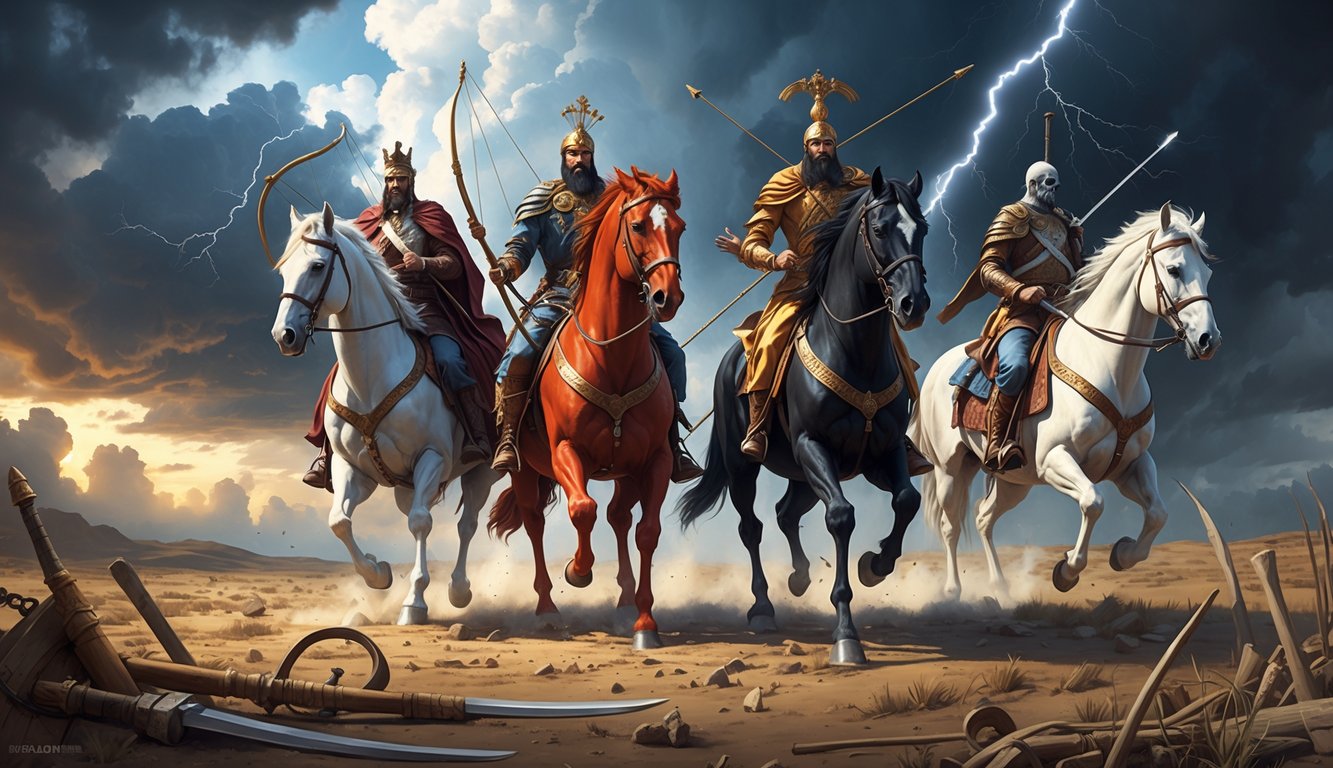
The vision of the Four Horsemen in Revelation 6 has been studied for centuries. Many see them as a sequence of events tied to God’s judgments, human conflict, and the spread of the gospel.
Others view them as symbols that apply to different times in history, pointing to both warning and hope.
Symbolism and Historical Views
The first horse, white, is often linked to conquest or the spread of the gospel. Some believe it represents Christ’s victory, while others see it as false peace.
The red horse is tied to conflict and war. This matches historical patterns where violence followed expansion or unrest.
The black horse is associated with famine and economic hardship. Scales in the rider’s hand suggest scarcity and imbalance.
The pale horse represents death through war, disease, and hunger. Many interpreters connect this to cycles of human suffering seen throughout history.
Some scholars, such as those in this study of Revelation 6, believe these horsemen symbolize ongoing realities rather than one-time events. This allows the text to speak to both past and present generations.
Connections to Matthew 24 and Other Prophecies
Matthew 24:6-7 speaks of wars, famines, and earthquakes before the coming of God’s kingdom. These signs parallel the seals in Revelation 6.
- White horse – possible link to the preaching of the gospel (Matthew 24:14).
- Red horse – wars and rumors of wars (Matthew 24:6).
- Black horse – famines (Matthew 24:7).
- Pale horse – widespread death, echoing pestilence and disaster.
Prophecies in Daniel and Ezekiel also describe periods of judgment and divine intervention. These connections help readers see the seals as part of a larger biblical narrative about salvation and righteousness.
By comparing these passages, many conclude that Revelation’s imagery is consistent with Jesus’ own teaching about the end of the age.
Relevance for the Church Today
For many believers, the Four Horsemen are not just about the future. They remind the church to stay faithful during times of conflict, scarcity, or moral decline.
Churches often teach that these passages call for perseverance, prayer, and active sharing of the gospel. This reflects the belief that God’s kingdom advances even in hardship.
Some see the seals as a warning against trusting in human power for salvation. Instead, they point to Christ as the source of righteousness and hope.
The vision challenges believers to live with both urgency and faith, trusting that divine intervention will bring justice and restoration.
End Times Implications and Hope for Believers
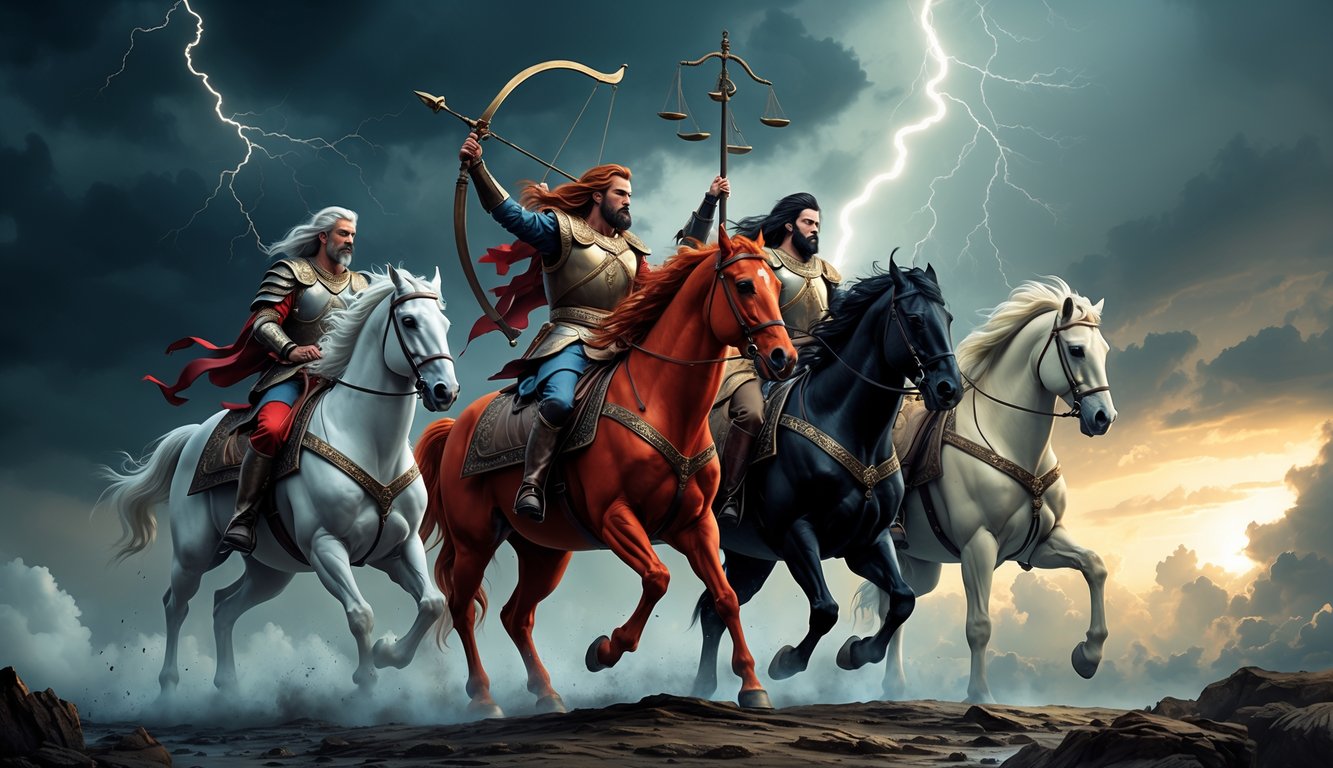
Believers often look at the events in Revelation 6 as both a warning and a reassurance. The passage shows that God allows trials but also promises restoration through Jesus Christ.
These truths give followers of Christ reasons to remain steady in faith even as the end times approach.
God’s Sovereignty and Purpose
The breaking of the seals in Revelation 6 shows that God directs history according to His plan. Even the rise of the Four Horsemen happens only when the Lamb opens each seal.
This means nothing in the end times occurs outside His control. God’s sovereignty assures believers that events like war, famine, and death are not random.
They serve a purpose in fulfilling His promises. This perspective helps the church avoid fear when facing global unrest.
Instead of panic, believers can trust that God’s will is unfolding exactly as intended.
As explained in studies of the Four Horsemen of the Apocalypse, these events have been at work since the prophecy was given, but will intensify before Christ’s return.
This shows His plan is both long-term and precise.
Call to Faithfulness and Repentance
The end times are often described as a period of testing for the church. Believers are called to remain faithful to Jesus and to turn away from sin.
Repentance is not only for those who do not yet follow Christ. It is also for believers who need to realign their lives with God’s commands.
Practical steps include:
- Daily prayer for strength and guidance
- Regular Scripture reading to stay grounded in truth
- Active fellowship with other believers for encouragement
As noted in Revelation 6 commentary, the imagery of the seals should move people to prepare spiritually, not just intellectually.
The Promise of Ultimate Justice
Revelation assures believers that Jesus will bring divine justice. The suffering, persecution, and injustice seen in the end times will not continue forever.
God will hold every person accountable for their actions. Those who reject Him will face judgment. Those who remain faithful will receive eternal life.
Believers can endure hardship without seeking revenge. They can trust that God’s justice will be perfect.
The vision of the Four Horsemen in Revelation 6 reminds Christians that judgment is real. It also gives hope that Christ will return to set all things right.
