
The topic of war has often sparked debate within Christianity, leading to two prominent views: just war theory and pacifism.
Just war theory argues that war can be morally justified under specific conditions, while pacifism holds that any form of violence is unacceptable. Both perspectives reflect deep-rooted beliefs about justice, peace, and the teachings of Jesus.

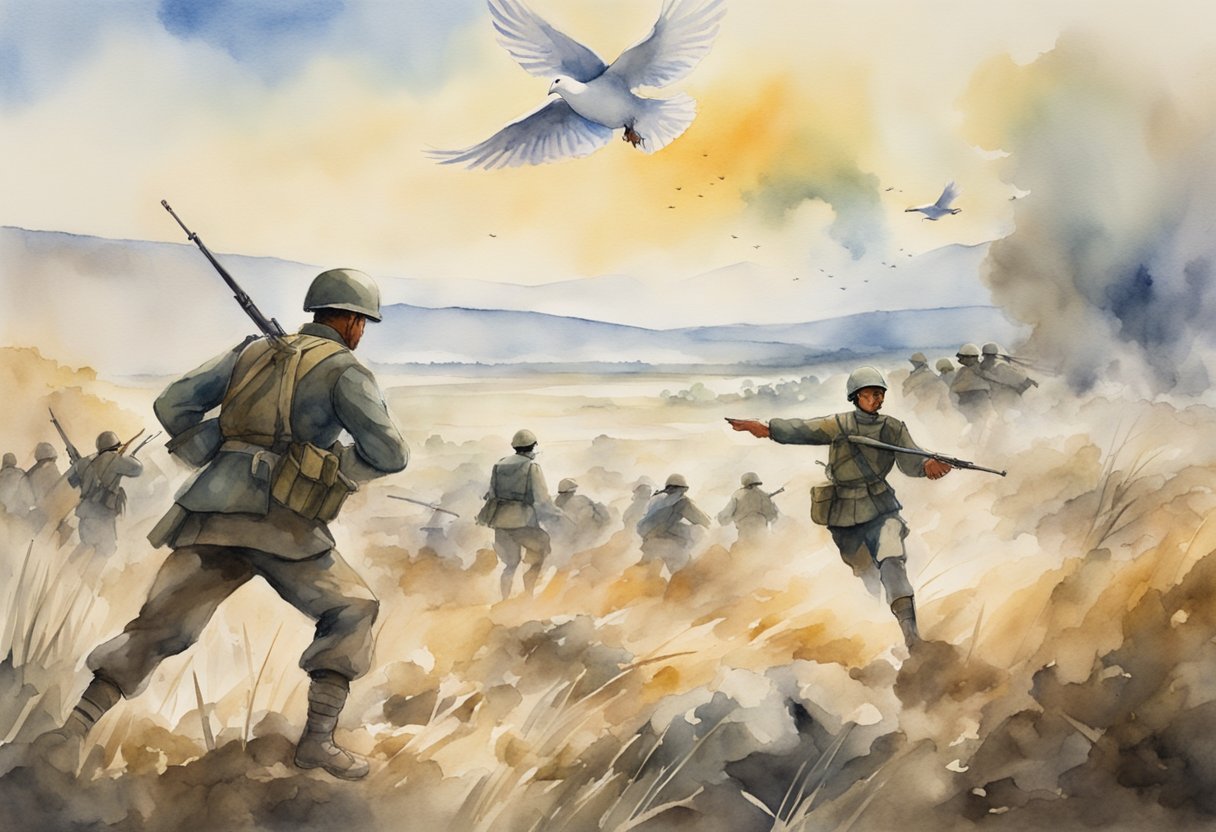
Throughout history, Christians have grappled with the moral implications of conflict.

Each side offers valid arguments, influenced by scripture and tradition, as they seek to understand how to live out their faith in a world filled with violence and strife.
The challenges of modern warfare and ethical dilemmas further complicate these discussions, making it crucial for believers to engage thoughtfully.
As they explore these views, individuals can find guidance on their own beliefs about conflict, morality, and the role of faith in peacemaking.
The discussion not only impacts individual choices but also shapes broader conversations about how communities respond to the realities of war.
Key Takeaways
- Just war theory provides a framework for when armed conflict may be considered moral.
- Christian pacifism emphasizes the rejection of violence in all forms.
- Understanding these views helps navigate the complex relationship between faith and conflict.
Historical Context of Christian Views on War
Christian views on war have evolved significantly over the centuries.


Early beliefs have shifted through key historical events like the Crusades and the World Wars. This journey reflects varying attitudes towards conflict among Christians, shaped by cultural and political influences.
Early Church Perspectives
In the first few centuries after Christ, early Christians largely viewed war with caution. The Roman Empire persecuted Christians, leading them to adopt pacifist beliefs. They believed in turning the other cheek, as taught in the Sermon on the Mount.
As Christianity gained legal status, the relationship with violence became more complex. Some Christians became soldiers, blending their faith with military duty. Despite this, many early Church leaders argued against war, viewing it as antithetical to Christ’s teachings.
The Crusades Era
The Crusades, which began in the late 11th century, marked a pivotal shift in Christian attitudes toward war. The Church encouraged knights to participate in these religious wars, framing them as holy missions. Leaders promised salvation to those who fought for reclaiming the Holy Land.

This period saw a blend of faith and militarism, with battles fought under the banner of Christianity. While some viewed these wars as justified, others criticized the violence, pointing out the suffering inflicted on both Christians and non-Christians.




World War II and Christian Responses
During World War II, Christian perspectives regarding war became even more diverse. Some Christian leaders supported their nations’ military efforts, arguing that fighting against totalitarian regimes was a moral duty. They believed that evil must be confronted to protect freedom and human rights.
Conversely, a strong pacifist movement also emerged among Christians. They highlighted the horrors of war and advocated for peace and reconciliation. Figures like Martin Luther King Jr. drew inspiration from Christian teachings, promoting non-violent resistance.
These historical contexts illustrate how Christian views on war have fluctuated, shaped by social, political, and theological influences over time.
Biblical Underpinnings and Influences
The biblical foundations of Christian views on war present distinct perspectives. Key teachings from the New Testament, particularly in the Sermon on the Mount, emphasize pacifism. In contrast, passages such as Romans 13 inform just war theory, highlighting the complexities within Christian ethics regarding violence.
Sermon on the Mount and Pacifism
In the Sermon on the Mount, Jesus teaches powerful lessons about love and nonviolence. He encourages His followers to practice turning the other cheek (Matthew 5:39) and to love your neighbor (Matthew 22:39). This radical call to love even enemies shapes the pacifist stance in Christianity.
Jesus emphasizes humility and forgiveness over retaliation. His directives challenge believers to resist the urge for violence. The call to peace is essential, pushing disciples to embrace a lifestyle that reflects compassion rather than hostility. These teachings have inspired many Christians to adopt pacifism as a vital aspect of their faith.
Romans 13 and Just War
Romans 13 presents a different view, where Paul speaks of governing authorities as agents of God’s will for justice. The passage suggests that rulers are tasked with maintaining order, even through force if necessary. This idea supports the just war theory, which asserts that war can be morally justified under specific circumstances.
Believers interpret this teaching as a call for responsible engagement in conflicts. The theory encourages taking up arms when it protects the innocent or upholds justice. The balance between pacifism and just war reflects ongoing debates within Christianity, showing the depth of biblical interpretation in addressing war and peace.
Just War Theory Explained

Just War Theory provides a framework for evaluating the morality of war. It focuses on the reasons for going to war (jus ad bellum), the conduct during war (jus in bello), and the justice needed after a conflict.
Principles of Jus Ad Bellum
Jus ad bellum examines the justified reasons for starting a war. There are several key principles:
Just Cause: A war must confront a real and certain danger. Simply wanting more land or power does not qualify.
Legitimate Authority: Only those in proper power, like governments, can declare a war. Soldiers must trust their leaders to act justly.
Right Intention: The goal should be to promote peace and justice, not revenge or anger.
Last Resort: War should only occur if all peaceful options have been exhausted.
These principles help ensure that war is undertaken for morally sound reasons.
Principles of Jus In Bello
Jus in bello focuses on how wars should be conducted. It aims to limit harm and protect those not participating in the conflict. The two main principles are:
Distinction: Combatants must clearly differentiate between military targets and noncombatants. Attacking civilians is strictly prohibited.
Proportionality: The force used must be proportional to the goals. Excessive or unnecessary violence is deemed unjust.

These guidelines stress that even in war, ethical considerations remain crucial.
Post-War Justice and Rehabilitation
After a conflict, it’s vital to address justice and healing. This phase contains:
Accountability: Those who committed war crimes should be held responsible. Justice helps prevent future conflicts.
Rehabilitation: Victims need support, including psychological care and resources to rebuild their lives.
Restoration of Peace: It’s essential to work towards repairing relationships between opposing sides. This could involve reconciliation efforts.
Such measures contribute to lasting peace and help societies recover from the trauma of war, adhering to the principles laid out in Just War Theory.
Christian Pacifism
Christian pacifism is rooted in the teachings of Jesus, emphasizing love and nonviolence as core values. It advocates for peace through active nonviolent resistance and seeks to protect the innocent without resorting to violence.
Biblical Basis for Pacifism

The foundation of Christian pacifism starts in the Bible. Jesus teaches love for enemies in Matthew 5:44, urging followers to respond with kindness rather than violence. This radical approach to love emphasizes forgiveness and reconciliation.
In addition, passages like Isaiah 2:4, which mentions swords being turned into plowshares, highlight a vision of peace. The message is clear: God’s desire is for humanity to seek nonviolent resolutions. This context lays the groundwork for pacifism within the Christian faith.
Famous Christian Pacifists
Throughout history, many Christians have embraced pacifism. Notable figures include Mahatma Gandhi, who, though not Christian, was influenced by Christian teachings, and Martin Luther King Jr., who advocated for nonviolent resistance during the civil rights movement.
Other examples include theologians like Leo Tolstoy, who promoted love and nonviolence based on Jesus’s principles. These individuals demonstrate how pacifist beliefs can inspire social change and justice through peaceful means.
Christian Pacifism in the Modern World
Today, Christian pacifism continues to be relevant. Many churches and organizations focus on nonviolent resistance as a means to address conflicts. They promote teachings of Jesus in efforts to protect the innocent and advocate for peace.

Groups such as the Fellowship of Reconciliation work to unite pacifists around the globe. Their mission emphasizes active nonviolent resistance, pushing for social justice without causing harm. This reflects a commitment to love that Jesus exemplified.
In contemporary society, the principles of Christian pacifism serve as a guiding light for many, emphasizing the enduring call to love and peace amidst conflict.
Ethical Dilemmas and Modern Challenges
Christian views on war face several ethical dilemmas and modern challenges.
Topics such as the justification for violence, responses to terrorism, and the ethics of military service raise complex questions. These issues demand careful consideration from a moral and theological perspective.
Violence in Self-Defense

The question of violence in self-defense is a hot topic in Christian ethics.
Many believe that self-defense can be justified when it protects innocent lives. Jesus’ teachings emphasize love and forgiveness, but also recognize the reality of evil and original sin.
Some argue that extreme violence can sometimes be seen as necessary to stop greater harm, while others stress that resorting to anger or revenge is against Christian values. This creates tension in understanding when, if ever, violence is permissible.
Christians often grapple with how to protect loved ones without compromising their moral beliefs. Balancing the call for peace with the instinct for self-defense poses significant challenges.
Warfare and Terrorism
Warfare and terrorism further complicate ethical considerations.

Many Christians view war as evil, opposing it whenever possible. Yet, the existence of terrorism raises questions about self-defense and justice.
Terrorism often targets innocent civilians, making responses difficult. Some argue for a just war approach, which allows for military action under specific conditions. Others insist that nonviolent methods should be the sole response, following the teachings of Jesus on peace and love.
This creates a split in opinion among Christians. The challenge lies in discerning what actions align with faith while addressing the realities of a violent world.
Ethics of Military Service
Military service presents significant ethical dilemmas for Christians.
Joining the armed forces often means participating in actions that conflict with Christian teachings on peace and nonviolence.

Some believe that serving in the military can uphold justice and protect the vulnerable. Others argue that even justifiable wars lead to violence, murder, and suffering. The challenge lies in maintaining personal integrity while serving a national agenda.
Service members often face moral injury caused by the realities of war. The struggle to reconcile their actions with their faith influences how they view their role in military service, raising profound questions about loyalty, duty, and morality.
Legal and Political Considerations
Understanding the legal and political aspects of Christian views on war involves exploring issues like conscientious objection and the role of Christians in civil governance. These factors impact how believers engage with conflict and state authority.
Conscientious Objection and the Law
Conscientious objection is a significant issue for many Christians. It allows individuals to refuse military service due to moral or religious beliefs. In various countries, laws recognize this right, enabling those who oppose war to serve in alternative roles.

For Christians, the belief in promoting peace can lead to such objections. They may view themselves as advocates for a just peace, aligning with their faith. When confronting the call to serve in armed conflict, they consider the teaching that governing authorities are ministers of God.
These authorities are meant to promote good and serve justice, not engage in violence. The challenge lies in navigating between respect for the law and their ethical beliefs.
Christians in Civil Governance
Many Christians hold positions within civil governance, contributing to discussions about war and peace. They often seek to ensure that policies align with Christian ethics.
This involves advocating for just peace and addressing the complexities of warfare and diplomatic relations.
In these roles, Christians may work as authorities, guiding communities towards justice and reconciliation. They bear the responsibility of balancing their faith with the demands of political life. By doing so, they can act as avengers of good in society.
Christian involvement in governance helps shape laws that reflect moral principles, providing hope for a peaceful future. Their influence can promote understanding between conflicting groups and seek alternatives to war whenever possible.
Practical Applications in Peacemaking

In the realm of Christian views on war, peacemaking plays a critical role. Both church leadership and individual actions can have significant effects in preventing conflict and fostering peace.
Church Leadership in Peacebuilding
Church leaders often hold a unique position to influence peacebuilding efforts. They can advocate for active nonviolent resistance, which encourages members to stand against injustice without resorting to violence. This approach aligns with the belief of protecting the innocent.
Leaders can organize community events focused on dialogue and understanding. By promoting discussions on conflicts, they help congregations navigate differences peacefully. They may also endorse humanitarian efforts that provide aid during armed conflict.
Additionally, church teachings based on the just war tradition emphasize the use of proportionate means when addressing conflict. These principles guide leaders to promote peace while discouraging violence.
Role of Individuals in Conflict Prevention
Individuals play a vital role in fostering peace within their communities. Engaged members of the church can take initiatives to mediate conflicts. They can also actively promote forgiveness and reconciliation among those in dispute.
Volunteering for organizations committed to peace helps individuals contribute meaningfully. This involvement often complements church-led initiatives aimed at maintaining harmony.
Moreover, individuals can educate themselves and others about the implications of war and peace in their lives. Simply understanding the broader impacts of conflict can motivate them to take a stand against violence.
Such active participation ensures that peace efforts grow from the grassroots level. This makes them more effective and sustainable.
